
international
March 18, 2026
Why Russia Suddenly Diverted Oil to India: A Silent Shift That Could Redefine Global Energy Power
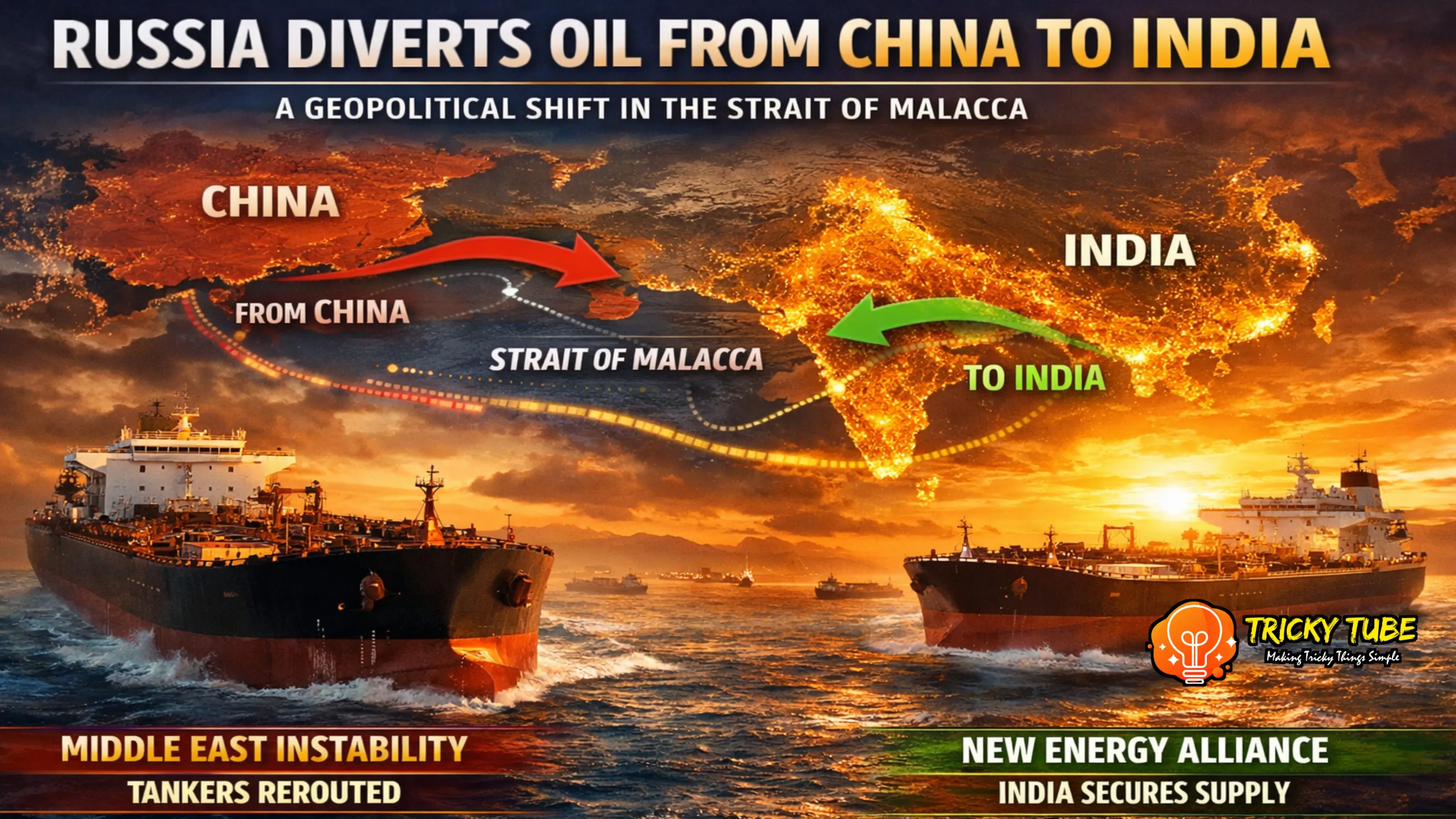
What happens when oil tankers change direction mid-sea? A quiet geopolitical shift. Russia diverting millions of barrels from China to India isn’t just trade-it’s strategy, survival, and a bold signal of changing global power dynamics.
Trickytube’s Quick Summary
- Russian oil tankers changed route mid-journey from China to India
- India secured ~30 million barrels quickly due to readiness
- China didn’t compete aggressively due to strong reserves
- Russia is diversifying buyers to reduce dependency
- Japan & South Korea are facing high fuel prices due to sanctions
- Global oil trade is shifting toward flexible, opportunistic buyers
The Moment That Changed Everything
What if I told you that in the middle of the ocean, massive oil tankers suddenly changed course-not because of weather, but because of geopolitics?
That’s exactly what happened recently. Multiple Russian oil tankers, carrying millions of barrels of Urals crude, altered their routes near the Strait of Malacca. Their original destination? China. Their new buyer? India.
This wasn’t a random decision. It was a calculated move triggered by rising instability in the Middle East and shifting economic priorities. And honestly, this moment might quietly mark one of the biggest energy realignments of this decade.
India’s Smart Play: Timing + Strategy = Power Move
India didn’t just get lucky here-it acted fast.
Within a single week, India reportedly secured around 30 million barrels of crude oil. That’s not small-scale buying. That’s aggressive, strategic accumulation.
The reason India could pull this off so smoothly comes down to two major advantages:
- Refinery Compatibility: Indian refineries are already optimized to process Russian Urals crude efficiently.
- Trade Flexibility: India has built strong logistics and payment channels with Russia since the Ukraine conflict began.
So when Russia started looking for alternative buyers, India was ready—no delays, no hesitation.
In my opinion, this highlights something bigger: India is no longer just reacting in global markets-it’s actively shaping outcomes.
Why China Stepped Back (And Didn’t Panic)
At first glance, it might seem like China lost out. But that’s not entirely true.
China has something India doesn’t-massive strategic oil reserves and direct pipeline connections with Russia. This gives China flexibility. It doesn’t need to rush into every available shipment.
So when disruptions hit and tankers were rerouted, China could afford to step back. India, on the other hand, saw an opportunity-and grabbed it.
This dynamic shows a subtle but important shift:
China is playing the long game, while India is winning in real-time execution.
Russia’s Bigger Strategy: Don’t Depend on One Buyer
For Russia, this isn’t just about selling oil-it’s about reducing risk.
Relying too heavily on a single buyer like China can be dangerous. Any pricing pressure or political shift could hurt Russia’s economy. By diverting shipments to India, Russia is:
- Expanding its customer base
- Increasing bargaining power
- Reducing dependency on China
This diversification is a classic strategy in global trade—but executing it mid-sea, literally rerouting tankers, shows how dynamic and urgent the situation has become.
Meanwhile, Japan & South Korea Are Paying the Price
While India secured discounted oil, countries like Japan and South Korea are facing the opposite situation.
Due to their alignment with Western sanctions, they’ve been hesitant to purchase Russian crude. The result?
- Record-high gasoline prices
- Increased import costs
- Reduced flexibility in sourcing energy
This creates a clear contrast:
- Countries that stayed flexible are benefiting.
- Countries that stayed rigid are paying more.
What This Means for the Future of Oil Markets
This incident may look like a short-term adjustment, but its implications are long-term.
We are witnessing a fragmentation of global oil trade, where:
- Traditional alliances are weakening
- New energy corridors are forming
- Pricing power is shifting toward flexible buyers
India’s growing role in this ecosystem is particularly important. If this trend continues, India could emerge as a major energy trading hub, not just a consumer.
FAQs
1. Why did Russia divert oil from China to India?
Due to Middle East disruptions and strategic diversification, Russia redirected shipments to a ready buyer-India.
2. How much oil did India secure?
India secured approximately 30 million barrels in one week, showcasing aggressive buying.
3. Why didn’t China compete for the oil?
China has large reserves and pipeline supply, allowing it to avoid urgent purchases.
4. Which countries are negatively impacted?
Japan and South Korea are facing higher fuel prices due to sanctions compliance.
5. What does this mean for India?
India is emerging as a key global energy player with strong negotiation power.