
International
January 14, 2026
Why China's Communist Party Walked Into BJP & RSS Headquarters in 2026 -A big move before BRICS
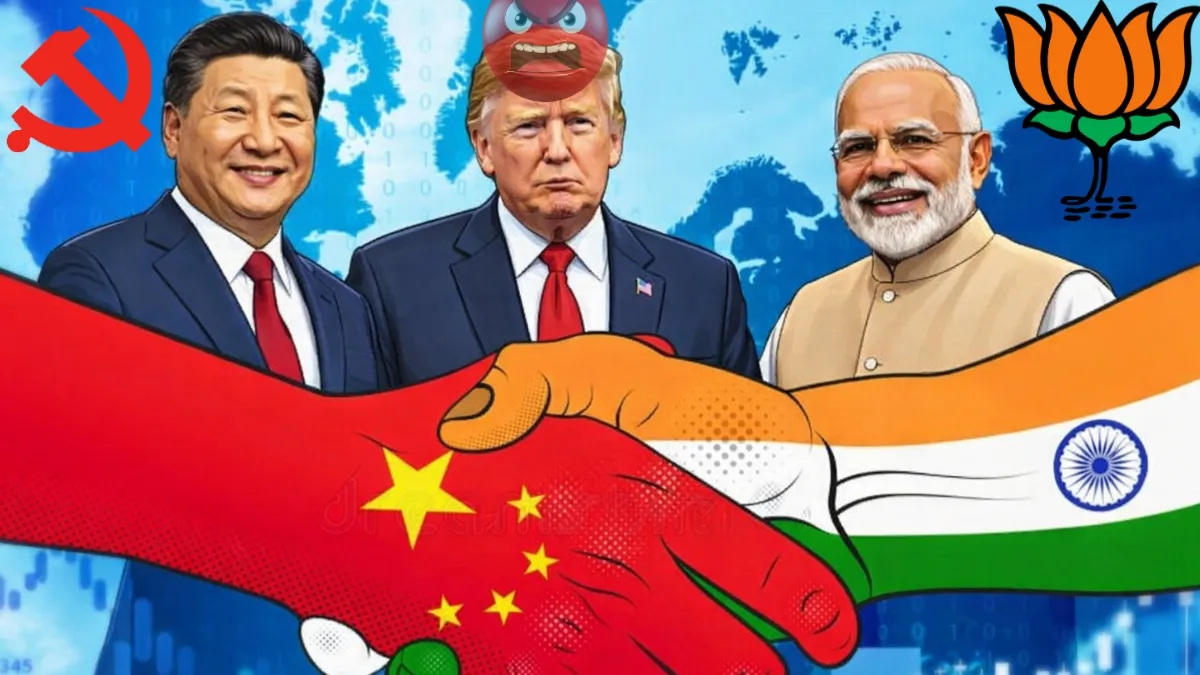
In January 2026, a quiet but powerful diplomatic moment unfolded in India when a Chinese Communist Party delegation visited the BJP headquarters and the RSS office. This was not a routine courtesy call-it was a carefully calculated geopolitical move with long-term implications for India, China, the US, and the global power balance. Here’s what this visit really means and why the world should pay attention.
TrickyTube’s Quick Summary
China’s CPC visiting BJP and RSS in 2026 wasn’t about friendship-it was about future power alignment. With BRICS, US-India tensions, and global realignments ahead, China wants to understand and influence India beyond government channels. This was chess, not checkers.
The Visit That Spoke Louder Than Press Releases
In January 2026, a senior delegation from the Chinese Communist Party (CPC) made an unprecedented stop in New Delhi-not at a government ministry, but at the headquarters of India’s ruling party, the Bharatiya Janata Party (BJP), followed by a visit to the Rashtriya Swayamsevak Sangh (RSS).
This meeting quietly rewrote diplomatic norms. It was the first formal party-to-party interaction between the BJP and the CPC since the violent 2020 border standoff, an event that had frozen trust and hardened public opinion on both sides. What made this moment extraordinary wasn’t just who met-but how and why.
Why This Meeting Was Not “Normal Diplomacy”
Globally, political parties talk. But China almost never sends top Communist Party leaders to meet core political and ideological institutions of another country. China usually prefers state-to-state engagement, keeping ideology tightly controlled at home. So when the CPC delegation chose to meet both the BJP and the RSS, it signaled something deeper: China was not just studying India’s government it, was trying to understand India’s political DNA. The RSS is widely seen as the ideological backbone of the BJP. By stepping inside its premises, China effectively acknowledged a reality it can no longer ignore: India’s policy direction is shaped as much by ideology and long-term vision as by elected officeholders. This was political intelligence gathering at the highest level -open, symbolic, and intentional.
Numbers That Matter: Power Through People
Another subtle but powerful layer of this engagement lies in numbers.
- BJP membership: 140+ million
- CPC membership: 100+ million These are not just parties; they are mass movements that influence governance, culture, and national priorities. When two of the world’s largest political organizations sit across the table, it reflects a recognition of mutual weight in global affairs. This was China saying, without saying it out loud: “India is no longer just a regional power-it’s a political force we must engage structurally.”
Domestic Criticism & the Pakistan Shadow
The visit was immediately criticized by the Indian National Congress, which called the engagement hypocritical. The INC questioned the BJP’s Double standards with regard to china. Critics pointed to China’s history of anti-India actions, including military tensions and alleged support to Pakistan during Operation Sindoor. But here’s the geopolitical truth: Diplomacy does not run on emotions-it runs on interests. Despite public skepticism, India-China relations have shown slow but visible thawing:
- Direct flights have resumed
- Military disengagement talks continue
- Border tensions are being managed rather than escalated This CPC visit fits into that broader pattern-quiet stabilization without loud announcements.
The United States Factor: A Vacuum China Is Trying to Fill
An often-ignored driver behind this visit is the changing perception of the United States in India. Statements by Donald Trump, including criticism of India’s economy and repeated claims of mediating India-Pakistan conflicts, have dented America’s goodwill among Indian policymakers and the public alike. China is watching closely and understands that geopolitics is not just about power-it’s about narrative space. Any crack in US-India trust becomes an opportunity for China to present itself as a more “respectful” and pragmatic partner. This visit was part of that image reset .
BRICS 2026: The Real Reason Behind the Timing
India is set to host the BRICS Summit in 2026-an event that will draw intense global scrutiny. Expected attendees include: Xi Jinping and Vladimir Putin, But this BRICS is not the old BRICS. The bloc has expanded to include Iran, Egypt, Ethiopia, and the UAE, turning it into a far more controversial and geopolitically sensitive platform. The CPC delegation’s visit looks very much like groundwork-ensuring that President Xi’s eventual visit to India happens smoothly, without political surprises or ideological misunderstandings.
2026 could be the Year that Will Shape the Next 15 Years of India
2026 is not just another year-it’s a geopolitical turning point. Over the next decade:
- India will be strategically courted by both China and the US
- Economic alliances will matter as much as military ones
- Political ideology will influence foreign policy more openly India will not “choose a side” easily. Instead, it will attempt what few nations can-strategic autonomy in a polarized world. And China knows this. That’s why it knocked on the BJP and RSS doors-not later, but now.
FAQs
Why did the CPC meet the RSS specifically?
Because RSS influences BJP’s long-term ideological direction. China wanted insight into India’s deeper political thinking, not just policy headlines.
Does this mean India and China are becoming allies?
No. It means both sides are managing rivalry more strategically rather than emotionally.
How is the US connected to this visit?
Deteriorating perceptions of US reliability in India create diplomatic space for China to improve engagement.
Why is BRICS 2026 so important?
Because expanded BRICS challenges Western-led global systems, making India’s role far more complex and influential.
What should Indians take away from this?
India is entering a phase where every major power wants its attention and how India balances this will define the next decade.