
Economics, International
January 14, 2026
Why a Weak Indian Rupee Is No Longer “Good News” Bank of America’s Five-Channel Warning Explained
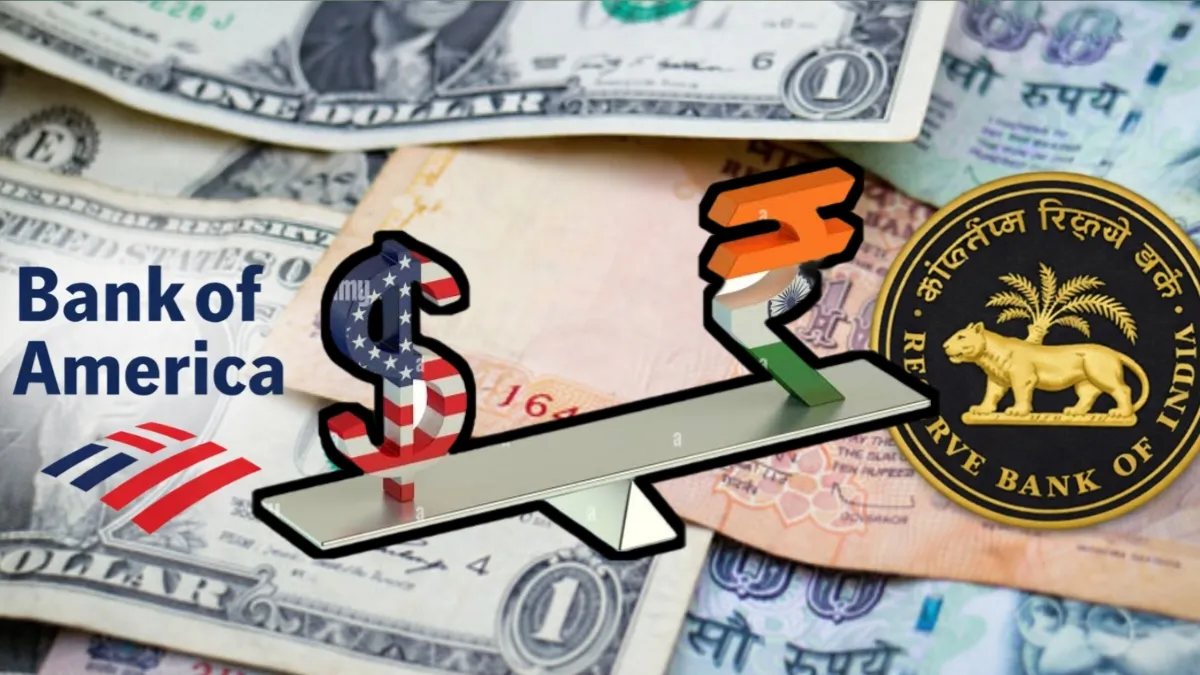
For decades, a falling rupee was seen as a hidden advantage for India-good for exports, growth, and competitiveness. But according to Bank of America, that old logic is breaking down fast. In today’s globally integrated economy, a weak rupee is no longer a simple trade story. It has become a multi-layered economic risk touching growth, inflation, capital flows, and even government finances.
TrickyTube’s Quick Summary
A weak rupee is no longer India’s growth booster-it’s a stress indicator. In a capital-driven, import-heavy economy, depreciation hits confidence, growth, inflation, capital flows, and government finances simultaneously. Bank of America’s warning makes one thing clear: currency stability is now macro stability.
The Old Belief: Weak Rupee = Strong Exports
There was a time when rupee depreciation was almost celebrated. The logic was simple:
- Cheaper rupee =cheaper Indian exports
- Cheaper exports = higher global demand
- Higher exports = stronger GDP growth This framework worked when India’s economy was more closed and export-oriented with limited import dependency. But that India no longer exists. Today, India is deeply embedded in global value chains. A large part of what we export-whether goods or services depends heavily on imported inputs. That single shift changes everything. Bank of America (BofA) argues that the weak rupee has transformed from a tactical advantage into a five-channel threat to the Indian economy.
The Five Channels Through Which a Weak Rupee Hurts India
1.Sentiment Channel
Currency is not just a price; it is a signal. A continuously weakening rupee sends a message to global investors that something may be structurally wrong with the economy. Foreign portfolio investors (FPIs) don’t look at today’s numbers-they look at tomorrow’s risks. When the rupee keeps sliding:
- Investors worry about macro stability
- Equity and bond allocations get reduced
- Capital outflows accelerate Once confidence cracks, it becomes self-reinforcing. Capital leaves, the rupee weakens further, and sentiment deteriorates even more. This is why currency weakness often snowballs instead of stabilizing on its own.
2.Growth Channel
The idea that a weak rupee boosts growth assumes exports are price-sensitive. That assumption is now flawed.
- Indian manufacturing exports have high import content
- Service exports depend more on global demand cycles than currency pricing When the rupee falls:
- Imported raw materials become expensive
- Production costs rise
- Corporate margins shrink Instead of stimulating growth, depreciation quietly eats into profitability. Companies either absorb the cost hit or pass it on to consumers-both outcomes weaken domestic demand. Over time, growth slows rather than accelerates. This is a critical shift most casual observers miss.
3.Inflation Channel
Rupee depreciation works like a hidden tax on the economy. India imports:
- 85% of its crude oil
- Large quantities of LNG, fertilizers, electronics, and defense equipment A weaker rupee directly raises the landed cost of these essentials. The impact flows through:
- Fuel prices
- Transport costs
- Food inflation
- Manufacturing prices Higher inflation puts the Reserve Bank of India in a bind. Instead of supporting growth with rate cuts, the RBI may be forced to:
- Delay easing
- Maintain tight liquidity
- Or even hike rates That slows consumption and investment just when the economy needs support.
4.Capital Flow Channel
On paper, a weaker rupee should improve the current account by discouraging imports and encouraging exports. In reality, the opposite risk dominates. India runs a structural current account deficit, which is financed by:
- Foreign Direct Investment (FDI)
- Foreign Portfolio Investment (FPI) When the rupee weakens sharply:
- FPIs pull money out
- External borrowing becomes costlier for Indian firms
- Dollar-denominated debt servicing rises The capital outflow impact can easily overwhelm any trade-side benefit. This is why currency pressure today is more about capital flows than trade flows.
5.Fiscal Channel
A weak rupee doesn’t just hurt markets-it strains government finances too. Direct impacts:
- Higher subsidy bills for imported fertilizers and fuel
- Increased cost of defense imports
- Higher interest burden on external debt Indirect impact:
- If the RBI sells dollars to defend the rupee, its surplus falls
- Lower RBI surplus means smaller dividends to the government That widens the fiscal deficit precisely when fiscal discipline is critical for investor confidence.
A Structural Problem, Not a Temporary One
BofA’s most important warning is this: this is not a short-term shock. India’s economy is now:
- Capital-flow driven
- Globally integrated
- Import-dependent That means currency weakness behaves very differently than it did 15–20 years ago. The RBI faces a difficult trade-off:
- Aggressive intervention drains forex reserves
- Passive approach risks inflation and confidence erosion The current policy is best described as a managed float-intervening just enough to prevent disorderly moves, without fixing a hard level.
FAQs
Why is a weak rupee no longer good for exports?
Because Indian exports rely heavily on imported inputs, which become more expensive when the rupee falls.
How does rupee depreciation cause inflation?
It raises the cost of imported essentials like crude oil, fertilizers, and electronics, which pass through to consumer prices.
Why do foreign investors react strongly to currency weakness?
A falling currency signals macro risk and reduces returns when profits are converted back into dollars.
Can RBI fully control the rupee?
No. RBI can smooth volatility, but defending a fixed level would rapidly drain forex reserves.
Is this rupee weakness temporary?
Bank of America believes the risk is structural, driven by capital flows rather than trade cycles.