
International
February 5, 2026
“We Can Wait”: How Ajit Doval’s One-Line Warning Changed the India–US Trade Deal
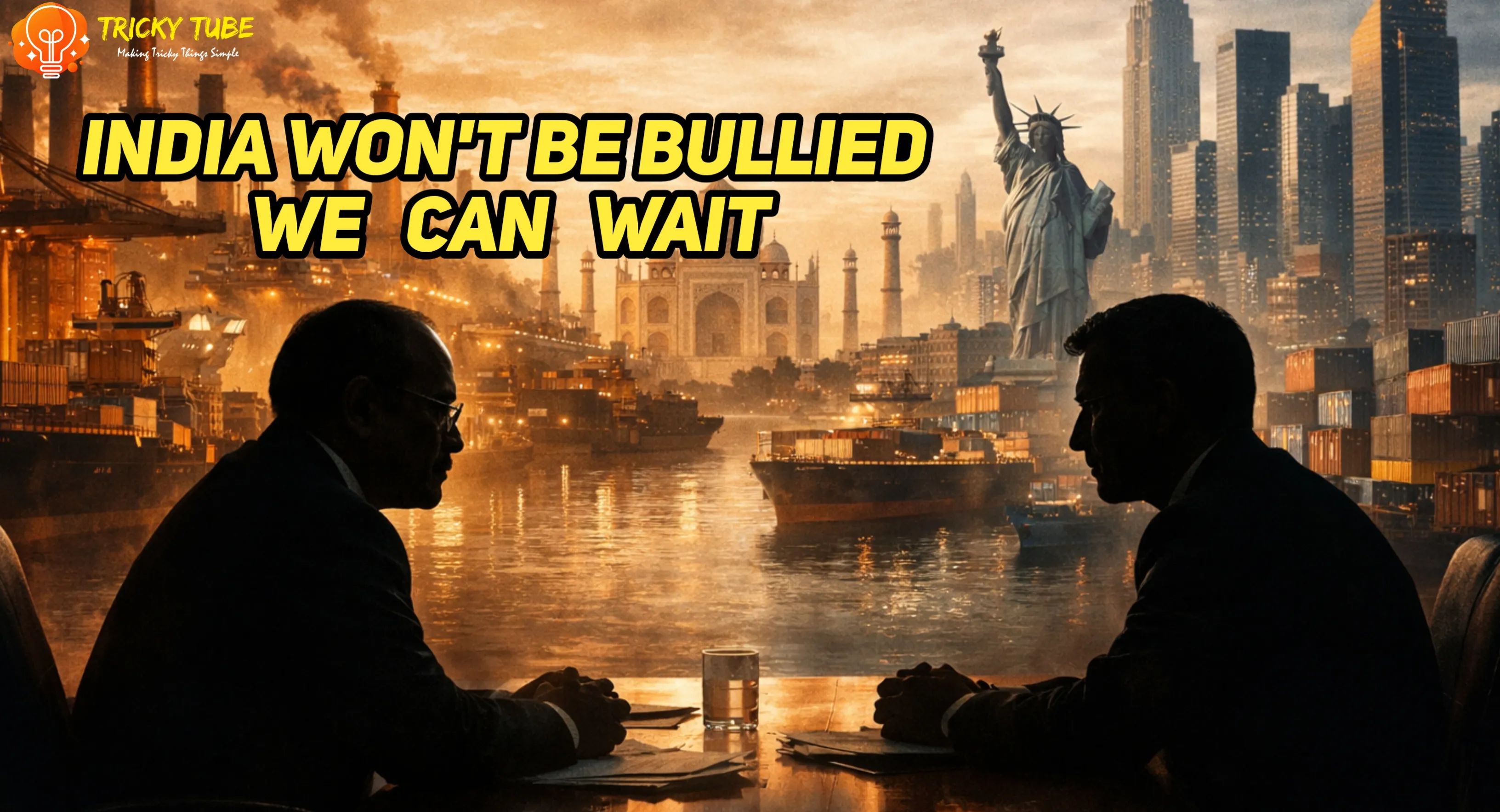
What happens when the world’s biggest economy tries to pressure a rising power—and fails? Inside the 2026 India–US Trade Deal and the quiet firmness that reshaped global diplomacy.
TrickyTube’s Quick Summary
India refused to be pressured during trade talks with the U.S., choosing patience over appeasement. Ajit Doval’s firm stance forced a reset in negotiations, ultimately delivering a fairer trade deal and signaling India’s growing global confidence.
What if the most powerful country in the world tried to corner you—and you calmly replied, “We can wait”?
That single posture, backed by quiet confidence and strategic clarity, is what reshaped the India–US Trade Deal of 2026. And at the center of it stood India’s National Security Advisor, Ajit Doval, delivering a message that was neither loud nor emotional—but firm enough to redraw red lines.
For years, trade negotiations between India and the United States carried an unspoken imbalance. US often negotiated from a position of pressure—tariffs, public criticism, and geopolitical leverage. But this time, something was different. India didn’t rush. It didn’t appease. And it certainly didn’t blink.
A Message That Left No Room for Misinterpretation
When Ajit Doval conveyed that India would not accept pressure, threats, or public humiliation, it wasn’t diplomatic theatrics. It was a strategic signal.
This wasn’t a negotiator posturing for leverage. Doval reports directly to the Prime Minister, and his words reflected the final political will of the Indian state. In diplomatic language, that translates to something very simple: these are our red lines, and they are non-negotiable.
More importantly, India made it clear that it was willing to wait out an entire U.S. presidential term if needed. That alone disrupted the usual power dynamic. The assumption that India needed a quick deal was suddenly off the table.
Why India Chose to Dig In
The American pressure campaign wasn’t subtle. High tariffs were imposed on Indian exports. India was repeatedly accused of unfair trade practices and economic protectionism. Public remarks questioned India’s market openness, sometimes bordering on outright dismissal.
Then came the geopolitical layer.
India’s purchase of Russian oil—driven by energy security and economic logic—was dragged into the Ukraine conflict narrative. The implication was clear: trade cooperation was being linked to political alignment. India refused that linkage.
From India’s perspective, economic partnership does not equal political subordination. Energy security, especially for a developing economy of over a billion people, is not a bargaining chip. This wasn’t stubbornness—it was strategic autonomy in action.
The “WE CAN WAIT” Doctrine
Here’s where things get interesting.
India assessed its own fundamentals and decided it could absorb short-term discomfort. Exporters would feel pain. Headlines would get noisy. But the broader economy was stable enough to hold its ground. That confidence marked a shift in mindset.
Instead of chasing a deal for optics, India chose to demand a fair one. In my view, this is the most underappreciated part of the story. A country only waits when it knows its leverage is real—not imagined.
This wasn’t bravado. It was patience backed by numbers, demographics, and long-term growth.
When the Tone in US Changed
Diplomacy often changes quietly before it changes publicly.
After Doval’s message, the U.S. softened its approach. Communication channels improved. The rhetoric cooled down. Trade talks resumed—not as a lecture, but as a conversation.
That shift tells you everything.
Pressure works only when the other side believes it has no alternative. Once India demonstrated it was comfortable walking slowly—or even standing still—the negotiating table leveled out.
The result was a trade deal that reflected mutual interest rather than one-sided demands.
A Tale of Two Approaches: India vs. Pakistan
The contrast with Pakistan’s approach during the same period is revealing.
Pakistan opted for appeasement, hoping alignment and accommodation would translate into economic relief. The outcome? Limited gains and stricter terms. India, by contrast, pushed back respectfully but firmly—and secured lower tariffs and better conditions.
This isn’t about chest-thumping. It’s a lesson in diplomacy: assertiveness backed by credibility beats submission every time.
What This Moment Really Says About India
Zoom out, and this article tells a much larger story. India no longer sees itself as a junior partner in global negotiations. It doesn’t align blindly with any bloc, nor does it confuse cooperation with compliance. The message is simple: India is open to partnerships—but only on equal terms.
In my opinion, this is what a confident middle-to-great power looks like. Not loud. Not reactive. Just clear about its interests.
The 2026 India–US Trade Deal wasn’t just about tariffs or exports. It was about respect. And in global politics, respect is often the hardest currency to earn.
FAQs
Why was India willing to delay the trade deal?
Because India assessed that its economy could withstand short-term pressure and believed a rushed deal would compromise long-term interests.
Did U.S. tariffs hurt India initially?
Yes, certain sectors felt pressure, but India prioritized strategic autonomy over immediate relief.
What made this negotiation different from earlier ones?
India entered the talks from a position of confidence, not urgency, changing the power balance.
Does this mean India is distancing itself from the U.S.?
No. India supports partnerships—but without political or economic coercion.
What does this mean for future global negotiations?
It sets a precedent that India will negotiate as an equal, not as a dependent partner.