
International
January 15, 2026
US Freezes Permanent immigration VISA for 75 countries including Pakistan, Bangladesh: Reasons Explained
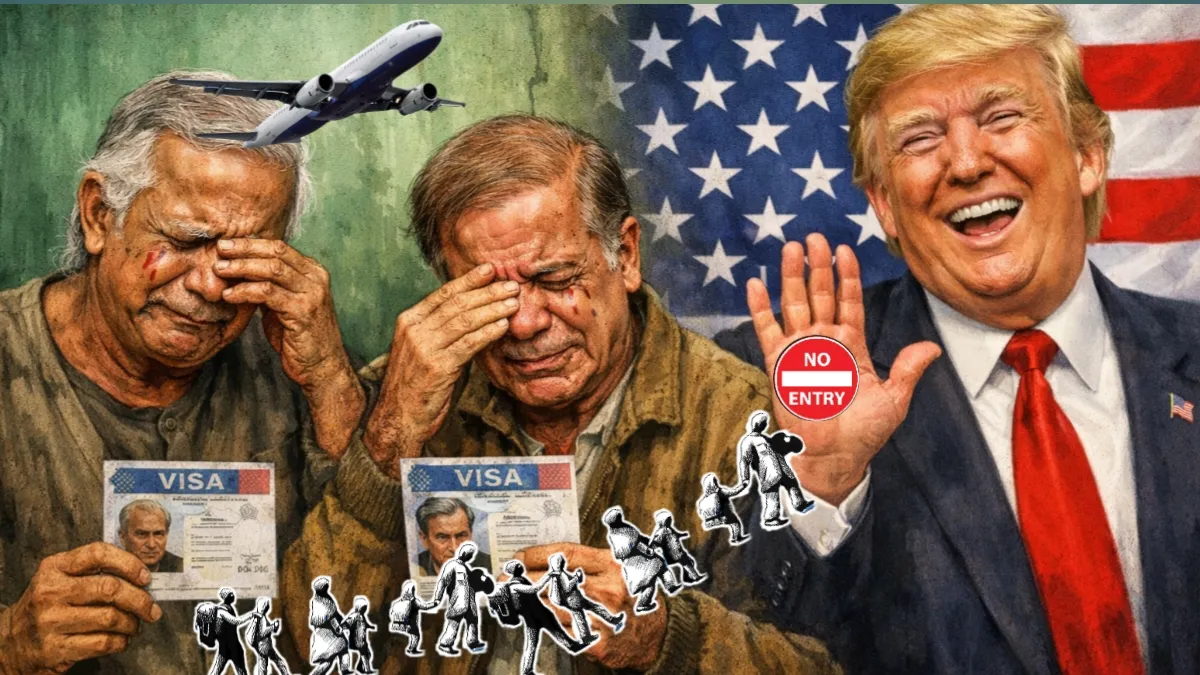
From January 21, 2026, the United States has quietly suspended immigrant visa processing for citizens of 75 countries. While tourist and student visas remain open, the road to permanent residency has effectively been blocked. This decision, tied closely to public charge rules and Trump-era immigration philosophy, could reshape global migration patterns for years.
TrickyTube’s Quick Summary
- The US has indefinitely suspended immigrant visas for citizens of 75 countries
- Permanent residency pathways are blocked; temporary visas still exist but face strict scrutiny
- The decision is rooted in public charge rules and Trump-era immigration policy
- Dual nationals may be exempt if they apply using a non-banned passport
- Critics call it a silent immigration ban with global consequences
What in the news
What if I told you that in just a few days, millions of people are about to lose their legal pathway to permanently settle in the United States-without any dramatic announcement, emergency speech, or global warning? That moment is approaching fast. On January 21, 2026, the US administration is set to indefinitely suspend immigrant visa processing for citizens of 75 countries, including Pakistan and Bangladesh. If this policy takes effect as announced, it will quietly shut down permanent immigration routes for millions-before most people even realize what changed.
What Exactly Has Been Suspended?
Let’s be very clear, because this is where confusion starts. The suspension applies only to immigrant visas-the visas that allow someone to live permanently in the US and eventually apply for citizenship. Immigrant visas that are now blocked:
- Family-based green cards
- Employment-based permanent residency
- Diversity Visa (DV Lottery)
- Refugee and humanitarian permanent visas If you are from one of the 75 listed countries, you cannot apply for these visas at all-no interview, no processing, no waiting list. And yes, this applies even if you qualify perfectly on paper.
What Is Still Open (But Harder Than Before)
Non-immigrant visas are technically still available:
- Tourist visas (B2)
- Business visas (B1)
- Student visas (F1)
- Temporary work visas like H1B However, “open” does not mean “easy.” Applicants from these countries should expect:
- Much longer processing times
- Higher rejection rates
- Deeper scrutiny of finances, intent, and background In short, even short-term US access is now far more difficult.
The Country List: A Clear Pattern
The 75 countries span:
- Africa
- Asia
- The Middle East
- Latin America
- Eastern Europe
- The Caribbean to see the complete list click here
A key detail many people noticed: India is not on the list. But several of its neighbors are Afghanistan, Bangladesh, Bhutan, Pakistan, and Nepal. This has already triggered political debate and diplomatic discomfort in the region.
The official reason: “Public charge”
The US government’s formal justification revolves around the Public Charge concept. In simple terms, the US does not want immigrants who may:
- Depend on welfare programs
- Lack stable income or assets
- Require long-term government-funded healthcare Future immigrant screening, if reopened, will heavily examine:
- Income and savings
- Job prospects
- Strength of family sponsorship
- Health-related financial risks From a policy standpoint, the message is blunt: America wants immigrants who are economically self-sufficient from day one.
The Political Reality: Trump’s Immigration Blueprint
Let’s not pretend this policy exists in isolation. This move aligns perfectly with the long-standing immigration philosophy of Donald Trump:
- Reduce permanent immigration
- Tighten asylum eligibility
- Increase background and security checks
- Shift immigration from humanitarian to economic utility Whether one agrees or not, this is not a sudden shift-it is a continuation.
Opinion
This looks less like a security measure and more like a structural redesign of who gets to become American.
“But I Have Two Passports” - The Dual National Exception
There is one important loophole. If someone:
- Holds a passport from a banned country and
- Also holds citizenship of a non-banned country They may apply for a US visa using the non-banned passport. This exemption is legal and explicitly acknowledged. Additionally, the US may grant case-by-case exemptions for:
- National interest
- Humanitarian emergencies
- Strategic or diplomatic reasons But make no mistake-these are exceptions, not the rule.
Why Critics Are Alarmed
Opposition voices argue that this is a de facto immigration ban targeting developing nations. Major concerns include:
- Discrimination based on nationality
- Violation of equal treatment principles
- Long-term damage to US diplomatic relations
- Possible legal challenges in US courts or Congress
Implication:
If challenged successfully, this policy could become one of the most legally contested immigration decisions of the decade.
Global Effect
This decision sends a strong global signal: Permanent migration to the US is no longer a universal aspiration-it is a privilege tightly controlled by economic value and geopolitical trust. Countries may now:
- Reconsider data-sharing agreements with the US
- Push for reciprocal visa restrictions
- Strengthen regional migration alternatives For individuals, the takeaway is harsh but clear: The era of “apply, wait, and hope” is ending.
FAQs
Is this a temporary suspension?
No official end date has been announced. It is indefinite.
Can people from banned countries still visit the US?
Yes, on non-immigrant visas-but with tougher checks and delays.
Is India affected by this ban?
No, India is not on the list.
Can this decision be reversed?
Possibly, through court challenges, Congressional action, or a future policy shift.
Does this affect people already living in the US?
No, it mainly affects new immigrant visa applicants outside the US.