
International
January 16, 2026
“This Time the Bullet Won’t Miss”: The US–Iran Conflict Entering Its Most Dangerous Phase- Reaction of US Allies
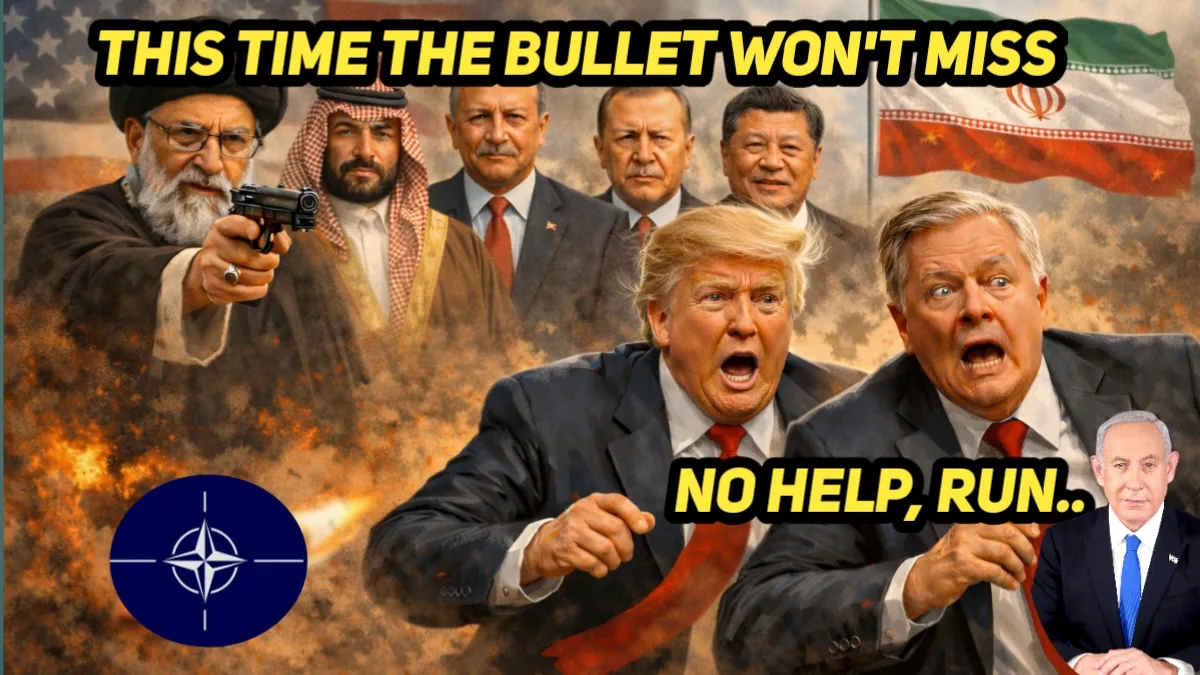
A chilling threat against Donald Trump, silent refusals from US allies, China’s quiet military moves, and nuclear whispers from Israel. the US–Iran conflict is no longer theoretical. This deep-dive analysis explains why the situation is far more dangerous than it looks.
TrickyTube’s Quick Summary
- Iran issued a chilling threat referencing Trump’s assassination attempt
- US allies refused to support any strike on Iran
- China is quietly boosting Iran’s defenses
- Internal regime change in Iran has failed
- Israel’s nuclear signaling adds psychological pressure
- The conflict is entering a slower, more unpredictable phase
What if a single threat was enough to push the world closer to war?
That is exactly what makes the latest escalation between Iran and the United States so unsettling. Iranian state television repeatedly airing posters that say “This time the bullet won’t miss the target” directly referencing a past assassination attempt on Donald Trump - is not propaganda for domestic consumption alone. It is a message meant to travel across borders. And it has. This isn’t just about Trump. It’s about deterrence, retaliation, collapsing alliances, and a Middle East that no longer responds to Washington the way it once did.
Why Iran Is Still Obsessed With Trump
Iran’s hostility toward Trump is deeply personal and strategic at the same time. His presidency marked one of the most aggressive phases of US policy against Iran sanctions that crippled Iran’s economy, open support for Israel, and the killing of top Iranian military figures. By replaying imagery linked to an assassination attempt and pairing it with threatening language, Iranian media is doing two things simultaneously:
- Signaling unresolved revenge
- Testing US red lines In my opinion, this isn’t about actually carrying out an attack - it’s about forcing the US to stay nervous, reactive, and politically boxed in.
If Anything Happens to Trump, War Becomes “Justified”
Here’s where the danger spikes. If Trump were attacked - even indirectly , the US would suddenly have the cleanest legal and moral justification to unleash overwhelming military force on Iran. No debates. No UN delays. No “strategic patience.” That’s why this threat matters. It quietly lays the groundwork for escalation, even if neither side openly admits it.
America’s Unexpected Problem: Allies Saying “No”
One of the most revealing aspects of the situation isn’t Iran’s threat - it’s who refused to support the US afterward.
Saudi Arabia: A Strategic Refusal
Saudi Arabia declared its territory completely off-limits for any US action against Iran. The reason is brutally pragmatic:
- Iranian retaliation would likely involve missiles crossing Saudi territory
- That could trigger Saudi Arabia’s defense pact with Pakistan
- Which would instantly internationalize the conflict Saudi Arabia isn’t choosing Iran over the US - it’s choosing containment over catastrophe.
Turkey: NATO, But Not This War
Turkey, despite being a NATO member, warned that bombing Iran would spark a long, uncontrollable conflict. No airspace. No intelligence. No support. This alone shows how fractured Western consensus has become.
Even the Gulf States Are Pulling Back
Perhaps most humiliating for US is the collective stance of Gulf nations like the UAE and Qatar. Their message was simple: Do not bomb Iran
For decades, US strategy in the Middle East relied on Gulf alignment. Today, that alignment is conditional, cautious, and self-preserving.
Even hawkish voices in the US, including Senator Lindsey Graham, reportedly expressed frustration at how isolated Washington suddenly looked.
China’s Quiet but Serious Role
While the US struggles diplomatically, China is playing a very different game. Multiple military transport flights into Iran strongly suggest Chinese assistance in strengthening Iran’s air defense systems. China isn’t shouting. It doesn’t need to.
This move has a clear implication: Any future US strike on Iran would be costlier, riskier, and far less predictable. In my view, China isn’t defending Iran - it’s complicating American options, which is far more effective.
The Coup That Never Happened
For years, US strategy quietly hoped internal unrest would weaken or overthrow Iran’s leadership. That window appears closed.
Protests were crushed. Thousands reportedly died. The regime survived.
From a cold strategic standpoint, Washington currently sees no viable internal lever to pull inside Iran. That leaves only external pressure - sanctions, cyber operations, or military force. None of those are clean solutions.
Israel, Earthquakes, and Nuclear Whispers
A 4.2 magnitude earthquake near Israel’s Negev Desert - close to sensitive nuclear facilities - triggered speculation of a possible underground nuclear test. Whether true or not, the signal matters more than the reality. Israel reminding Iran of its nuclear capabilities, subtly or otherwise, adds another layer of pressure. This is psychological warfare in its purest form.
So What Happens Next?
The conflict is far from over. What’s more likely is a recalibration:
- More covert operations
- More cyber warfare
- Proxy conflicts instead of direct strikes
- Strategic patience masking long-term plans A full-scale US attack on Iran may not be immediate - but the groundwork is being laid. And that, frankly, is what makes this phase so dangerous.
FAQs
Why is Iran still targeting Donald Trump rhetorically?
Because Trump symbolizes the harshest US actions against Iran and remains politically relevant.
Why did Saudi Arabia refuse US support?
Fear of Iranian retaliation and triggering its defense pact with Pakistan.
Is China openly backing Iran militarily?
Not openly-but evidence suggests defensive military assistance.
Will the US attack Iran soon?
Not immediately, but strategic groundwork is clearly being prepared.
Why is Israel relevant here?
Israel’s nuclear capability acts as an indirect pressure tool against Iran.