
International
January 25, 2026
Is the World Sliding Toward a US–Iran War… and Why India Is Quietly Caught in the Crossfire?
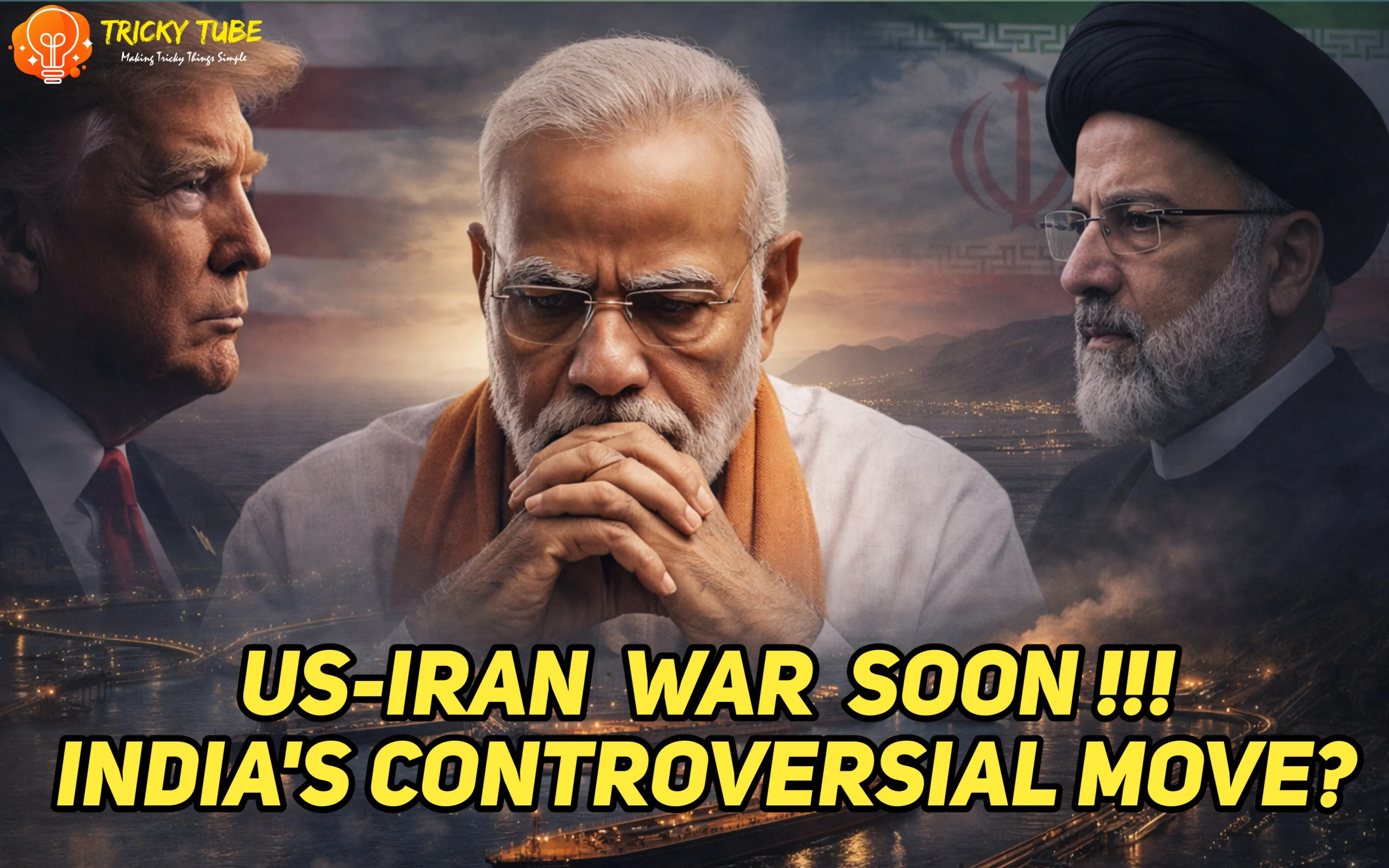
A single miscalculation in the Arabian Sea could ignite a regional inferno. As the United States moves aircraft carriers and missile defenses closer to Iran, Tehran warns of “all-out war,” global oil markets hold their breath, and India makes an unusually silent diplomatic move that could reshape its West Asia strategy.
## TrickyTube’s Quick Summary
- US moves major naval and missile assets near Iran
- Iran warns of “all-out war” and signals readiness
- India quietly shifts stance at the UN to protect strategic interests
- Oil prices, inflation, and global shipping face serious risk
- War isn’t inevitable — but the margin for error is terrifyingly thin
The Calm Before a Very Loud Storm
What happens when warships start gathering, missiles go on standby, and global powers stop speaking clearly? You get exactly what we’re seeing right now between the United States and Iran — a tense, dangerous silence that feels louder than any declaration of war. Over the past few days, tensions have escalated sharply. Iran has openly warned that any US attack would trigger an “all-out war.” Meanwhile, US has quietly but decisively repositioned massive military assets toward the Middle East, particularly the Arabian Sea. This isn’t routine posturing. This is pressure — strategic, psychological, and very real. Adding fuel to the fire, Donald Trump made a controversial claim that a US naval armada had stopped Iran from executing 837 protesters during recent unrest. Iran denied the allegation, but interestingly, the executions were halted. Coincidence or coercion? That question alone captures the ambiguity of this moment.
Why the US Is Flexing Muscle Near Iran
The United States has moved serious firepower into the region. The deployment includes the USS Abraham Lincoln strike group, guided missile destroyers, submarines, and critical logistics ships. On land, Patriot III missile systems and early-warning radar networks are being reinforced across the Gulf. Officially, this is about deterrence. Unofficially, it’s about leverage. The US believes Iran’s leadership is under immense internal pressure — protests, economic collapse, brutal inflation, and sudden fuel price hikes have shaken the regime. The US assessment is that Iran might try to “externalize” these problems by provoking an external enemy. In simple terms: when things fall apart at home, start a fire abroad. Iran’s response has been blunt. The Islamic Revolutionary Guard Corps warned that it has its “finger on the trigger,” signaling readiness for immediate retaliation against any US or Israeli move.
No Full-Scale War… But a Thousand Small Fires
Here’s where things get complicated. Most analysts agree Iran is unlikely to fight the US in a conventional, head-on war. The imbalance is too large. Instead, Tehran’s playbook is asymmetric. That means:
- Proxy attacks via militias across the region
- Missile and drone strikes on Gulf oil facilities
- Harassment of commercial ships in the Strait of Hormuz
- Cyberattacks on economic and infrastructure targets Any one of these could spike oil prices overnight. And that’s the real global danger. A disruption in the Strait of Hormuz — where a massive share of the world’s oil passes — wouldn’t just hurt the West. It would hit import-dependent economies like India first and hardest, through inflation, currency pressure, and energy insecurity.
India’s Quiet, Calculated, and Controversial Move
One of the most overlooked but important developments is India’s vote at the United Nations Human Rights Council. India, along with China, voted against a resolution condemning Iran’s crackdown on protesters. This marks a clear shift in India’s traditional foreign policy posture, which usually balances democratic values with strategic interests. Why the silence? Because India has a lot at stake. The Chabahar Port — crucial for India’s access to Afghanistan and Central Asia — could become collateral damage if US–Iran relations collapse further. Any sanctions escalation or military conflict threatens years of diplomatic and economic investment. In my view, this vote wasn’t ideological. It was defensive. India is trying to stay out of the blast radius.
Israel Watching, Waiting, Preparing
No discussion of Iran is complete without Israel. Israel is closely monitoring every move, reinforcing its air defenses and coordinating with US. If conflict breaks out, Israel is expected to provide intelligence, logistics, and strategic backing — even if it doesn’t lead the charge. That alone raises the stakes, because any Israeli involvement dramatically widens the conflict zone.
So… Is War Inevitable?
Not yet. And maybe not at all. The US strategy appears deliberately dual-track: maximum military pressure paired with diplomatic ambiguity. Trump himself has hinted that peace is still possible, suggesting the build-up is meant to deter, not provoke. But deterrence is a dangerous game. It only works if both sides read the signals the same way. History tells us that miscalculations — not intentions — often start wars. Right now, the world is standing in that exact gray zone.
FAQs
Why is the US increasing military presence near Iran?
To deter Iran from externalizing its internal crisis and to signal readiness without declaring war.
Will oil prices rise if tensions continue?
Yes. Even limited conflict or shipping disruptions can spike global oil prices instantly.
Why did India vote against condemning Iran at the UN?
Strategic interests, especially Chabahar Port and regional stability, likely outweighed public condemnation.
Is a full US–Iran war likely?
Unlikely, but asymmetric conflict and proxy escalation remain very possible.