
INTERNATIONAL
March 10, 2026
Iran’s Surprising Apology to Gulf Nations: Strategic Diplomacy or a Tactical Move Against the US?
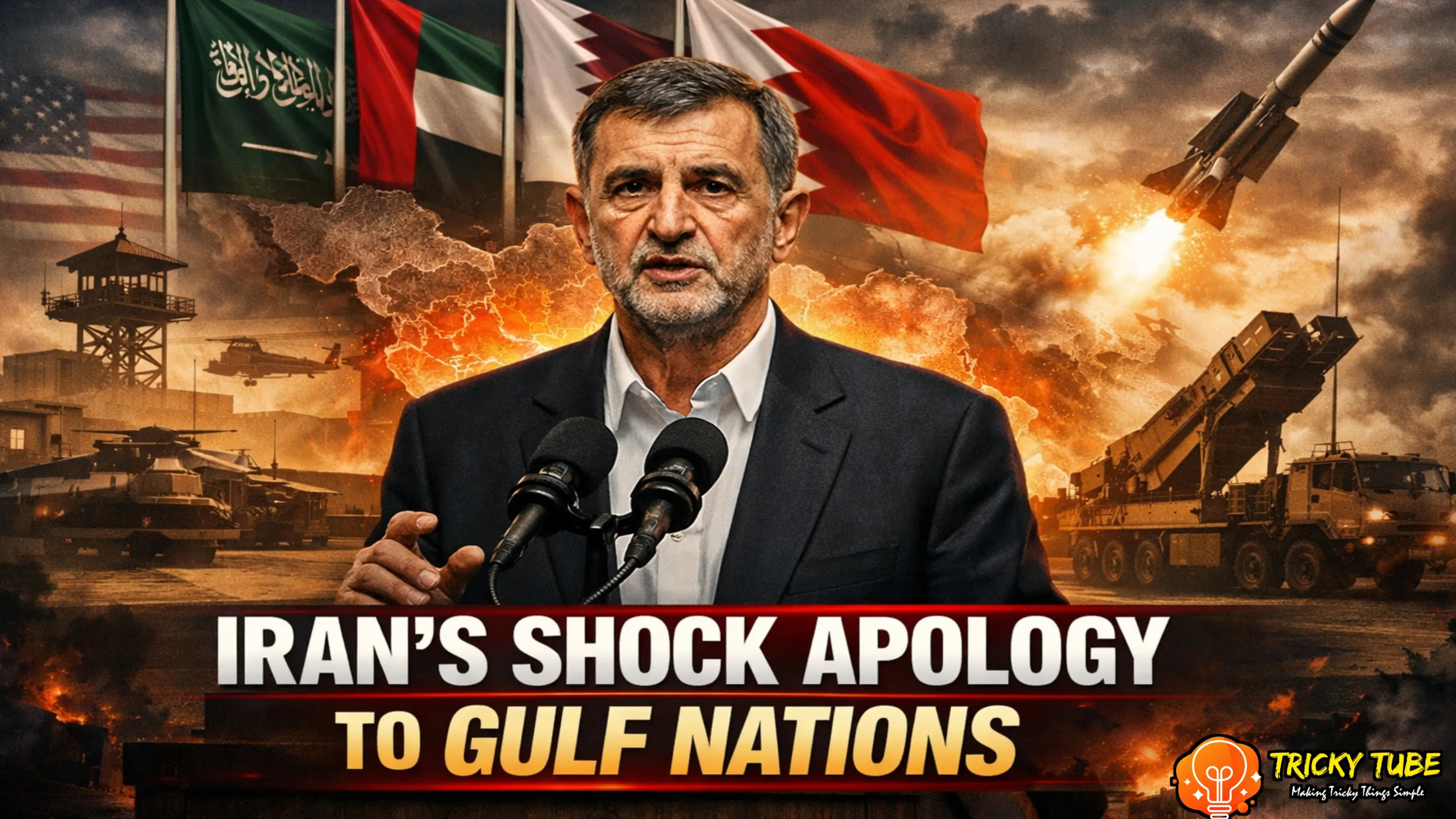
Iran recently issued a surprising apology to Gulf nations while accusing them of enabling US military actions from their soil. Is this a genuine diplomatic shift or a strategic move to weaken US alliances in the region? Here’s what it really means.
TrickyTube’s Quick Summary
- Iran issued an unexpected apology to Gulf nations including Saudi Arabia, UAE, Qatar, and Bahrain.
- The apology was conditional, warning against allowing US military operations from their territory.
- Donald Trump reacted strongly, calling Iran a “loser” and claiming the apology proves US pressure worked.
- Analysts suggest Iran may be attempting a strategic divide-and-conquer approach to weaken US alliances in the region.
- Despite the diplomatic tone, missile threats and military tensions indicate the conflict is far from over.
Iran’s Surprising Apology to Gulf Nations — A Diplomatic Shift or Strategic Pressure?
What happens when a country apologizes to its neighbors… while simultaneously accusing them of helping its biggest enemy?
That’s exactly the geopolitical twist unfolding in the Middle East right now. Iran has issued an unexpected apology to several Gulf nations — including Saudi Arabia, the UAE, Qatar, and Bahrain. But the apology came with a sharp warning: if these countries continue allowing the United States to use their military bases for operations against Iran, future safety cannot be guaranteed.
At first glance, the move looks like a diplomatic olive branch. But a deeper look suggests something much more strategic may be happening behind the scenes.
Iran’s Unusual Diplomatic Message
Iranian President Masoud Pezeshkian delivered a carefully crafted statement addressing neighboring Gulf countries. In the message, he apologized for any actions that may have caused harm or tension with these nations.
However, the apology came with a clear condition.
Iran insisted that Gulf states must prevent the United States from using military bases on their territory to launch attacks against Iran. According to Tehran, allowing American forces to operate from these bases effectively turns neighboring countries into participants in the conflict.
This conditional apology immediately raised eyebrows across the geopolitical community. On one hand, Iran appeared to be easing tensions with regional neighbors. On the other, it was placing responsibility on those same nations to distance themselves from Washington.
In other words, Iran wasn’t simply apologizing—it was setting a diplomatic trap.
Trump’s Sharp Reaction
The response from former US President Donald Trump came quickly and forcefully.
Trump publicly dismissed Iran’s move as a sign of weakness. According to him, Tehran’s apology proves that Iran is under pressure and “on its knees.” He argued that his previous policies toward Iran had forced the country into a position where it had no choice but to back down.
From Trump’s perspective, the apology was essentially a surrender — proof that aggressive pressure tactics had worked.
But not everyone agrees with that interpretation.
A Strategic “Divide and Conquer” Approach?
Many analysts believe Iran’s move is less about surrender and more about strategy.
The Middle East has long been shaped by complex alliances, especially between Gulf monarchies and the United States. American military bases in Saudi Arabia, Qatar, Bahrain, and the UAE play a key role in Washington’s regional presence.
By directly addressing these countries and framing them as potential victims of US military actions, Iran may be trying to shift the narrative.
The message is subtle but powerful:
“If conflict escalates, your territory becomes the battlefield.”
This approach could create pressure within Gulf governments and populations to reconsider how closely they align with Washington during escalating tensions.
In geopolitical terms, it resembles a classic divide-and-conquer strategy — attempting to weaken the cohesion of a potential coalition before it can fully unite against Iran.
If Gulf countries begin to worry about being dragged into a wider conflict, their willingness to host or support US operations could face domestic and diplomatic scrutiny.
The Conflict Is Far From Over
Despite the conciliatory tone of the apology, the broader situation remains extremely tense.
Iran has continued to signal that its missile capabilities remain active and ready. Military rhetoric from Tehran suggests that any further escalation involving US forces or regional allies could trigger retaliatory strikes.
This makes the apology feel less like a peace offering and more like a calculated diplomatic maneuver — one designed to influence regional politics while maintaining military pressure.
In fact, the combination of apology and warning may be the key message itself: Iran wants to appear reasonable while making it clear that the cost of alignment with Washington could be high.
What This Means for the Middle East
If Iran’s strategy works, it could complicate the United States’ regional security architecture.
For decades, Washington has relied heavily on partnerships with Gulf nations to maintain influence and military reach across the Middle East. Any hesitation among these allies could weaken coordinated responses to regional crises.
However, Gulf countries also depend on US security guarantees against threats from Iran. Completely distancing themselves from Washington is unlikely in the near future.
This creates a delicate balancing act.
On one side lies the need for protection and stability. On the other is the growing fear that becoming a staging ground for great-power conflict could bring war directly to their territory.
From a geopolitical perspective, Iran’s message seems designed to exploit exactly this dilemma.
FAQs
Why did Iran apologize to Gulf countries?
Iran apologized for tensions with Gulf nations but warned them against allowing US military operations from their territory. The move appears to combine diplomacy with strategic pressure.
What was Donald Trump’s reaction?
Trump dismissed Iran’s apology as a sign of weakness, claiming US pressure forced Iran into a defensive position.
Is Iran actually backing down?
Not necessarily. Many analysts believe the apology is part of a broader geopolitical strategy rather than a genuine retreat.
Could this affect US alliances in the Middle East?
Possibly. If Gulf countries feel threatened by potential conflict on their soil, it could influence how they cooperate with US military operations.
RELATED ARTICLES
Operation Epic Fury: Is the Middle East Standing on the Edge of a New War?
Missiles Over the Gulf: Is the Middle East Standing on the Edge of a Regional War?
Oil at $150? The Strait of Hormuz Threat That Could Shake India’s Economy
Middle East on the Brink: Iran’s Calculated Strikes Shake US and Saudi Interests