
National
January 29, 2026
India’s Banks Are Burning Out — And January 27 Was the Warning We Ignored
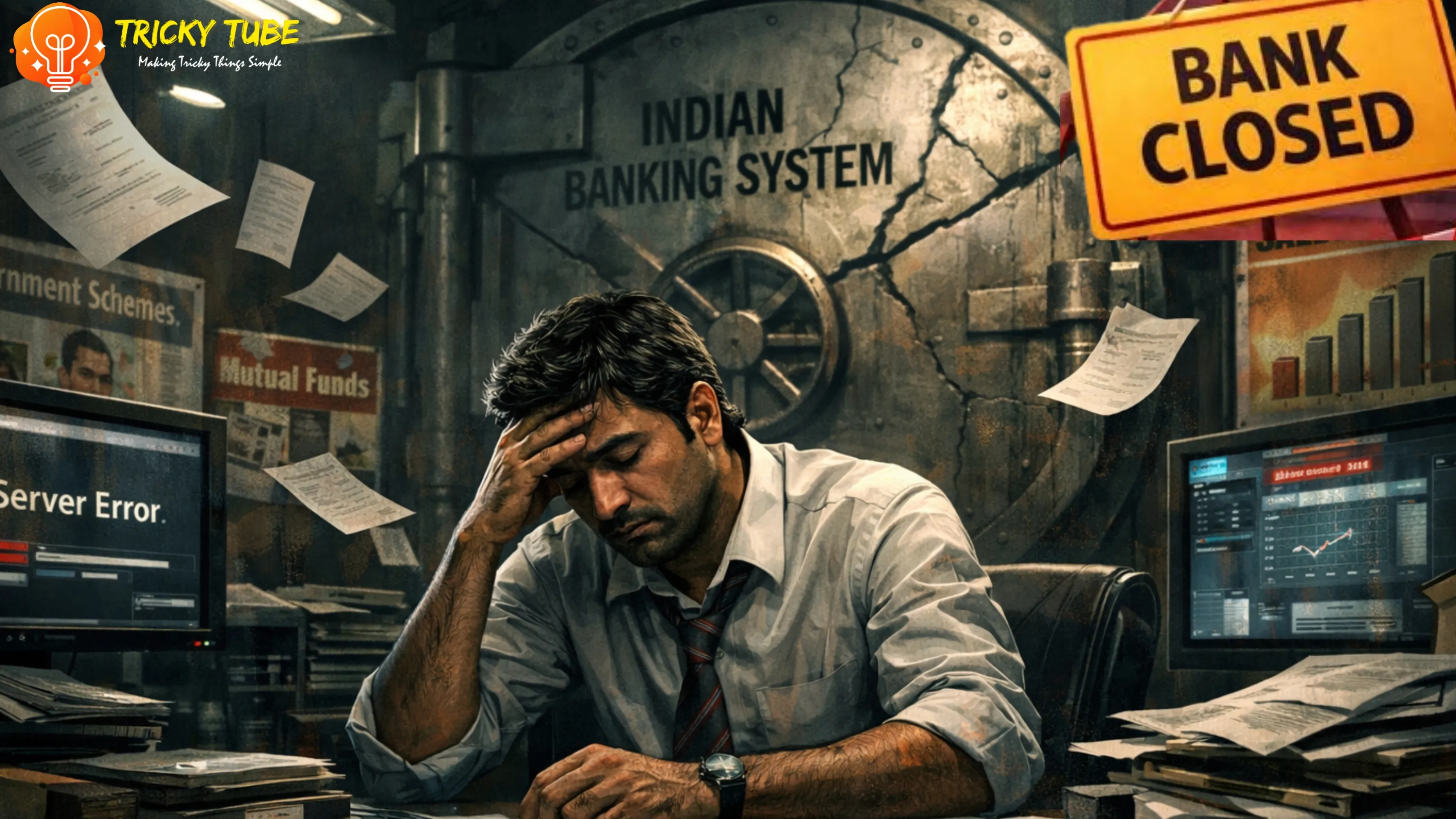
The January 27, 2026 bank strike in India is being reduced to a “5-day work week” demand — but the real issue is far deeper. From staff shortages and digital pressure to systemic risk and human capital erosion, this strike exposes a banking system stretched beyond sustainability. Here’s why ignoring it could cost the economy more than we think.
TrickyTube’s Quick Summary
- The January 27, 2026 bank strike is about burnout, not just holidays
- Bank staff face rising workload, shrinking manpower, and sales pressure
- Digital banking increased customer ease but employee stress
- Government concerns ignore long-term human capital costs
- An exhausted banking system poses systemic economic risk
What happens when the backbone of a growing economy is pushed beyond human limits?
On January 27, 2026, banks across India didn’t just shut their counters — they raised a red flag. A nationwide bank strike called by the United Forum of Bank Unions (UFBU) wasn’t about an extra holiday or a cushy demand. It was about exhaustion, systemic neglect, and a work culture that is quietly hollowing out India’s banking system from the inside. This wasn’t noise. It was a signal.
The 5-Day Work Week: The Symbol, Not the Core Problem
Let’s be clear-this strike is not just about a 5-day work week. Yes, bank unions are demanding a five-day working schedule. But that demand is symbolic. It represents something deeper: the need for breathing space in an increasingly suffocating system. What makes the delay harder to justify is that:
- RBI, SEBI, LIC already follow a 5-day work week
- Most of the IT and financial services ecosystem has moved on
- Even an agreement involving unions, the government, and the Indian Banks Association (IBA) was reached back in March 2024 Yet, two years later, implementation remains “under consideration”. At some point, delay stops being administrative — it becomes indifference.
One Banker, Five Jobs: The Reality Inside Branches
A decade ago, the workload of a bank employee looked very different. Today, the role has quietly mutated into something unrecognizable. A modern Indian banker is expected to be:
- A core banking professional
- A government scheme promoter
- A sales executive for insurance and financial products
- A compliance and reporting officer
- A crowd manager during elections, festivals, and financial drives All this, without proportional recruitment. Retirements have steadily increased. Hiring has not kept pace. The result? Fewer people doing more work — every single year. This isn’t efficiency. It’s slow institutional fatigue.
The Sales Pressure Nobody Talks About
Here’s an uncomfortable truth: public sector banking has quietly absorbed private-sector-style targets — without private-sector compensation or flexibility. Bank employees are pushed to:
- Sell insurance products
- Push mutual funds and bonds
- Meet cross-selling targets
- Promote every new government financial initiative All while maintaining zero error tolerance in compliance. When things go wrong, the accountability is instant. When things go right, it’s just “part of the job”. That imbalance wears people down — mentally and emotionally.
The Digital Trap: Convenience for Customers, Pressure for Staff
Digitization was supposed to make banking easier. For customers, it did. For employees? It created a new trap. Today, bankers face:
- Customer anger over server downtime
- Blame for cyber frauds they didn’t commit
- Pressure to resolve tech issues without real control over systems Ironically, the more digital banking grows, the more frontline staff become the shock absorbers of a system they don’t fully control. Technology didn’t remove pressure — it redirected it.
The Government’s Argument — And Its Blind Spot
The government’s position is straightforward: A 5-day work week may impact public access to banking services. That concern isn’t invalid. But it’s incomplete. What’s missing from the conversation is human capital cost. A fatigued workforce doesn’t just reduce service quality — it increases:
- Operational risk
- Compliance failures
- Errors in lending and risk assessment And in banking, small errors don’t stay small for long.
Why This Is a Systemic Risk, Not a Labor Issue
This is where the strike becomes truly serious. An exhausted banking system is a systemic risk. Burnout at scale affects:
- Credit decision quality
- Fraud detection
- Financial stability
- Trust in institutions If human capital keeps getting squeezed, the risk isn’t inconvenience — it’s institutional fragility. A growing economy cannot stand on tired shoulders forever.
My Opinion: Ignore This, and We Pay Later
Here’s my honest opinion — India is trying to scale its economy using a workforce model that belongs to another decade. You can’t demand global-scale performance from institutions while running them on stretched manpower and outdated work structures. If the system collapses under pressure later, the cost will be far higher than granting reasonable work-life balance today. This strike should be seen as preventive maintenance, not disruption.
Why This Topic Matters Beyond Banking
This issue goes far beyond bank employees. It directly connects to:
- Governance and labor rights
- Economic sustainability
- Institutional trust
- Public service delivery
The question isn’t whether banks deserve a 5-day week. The real question is: Can India afford to ignore the people who keep its financial system alive?
FAQ
Why did banks go on strike on January 27, 2026?
To protest unsustainable work pressure, staff shortages, and delay in implementing a 5-day work week.
Is the strike only about a 5-day work week?
No. The demand represents deeper issues like burnout, excessive workload, and lack of recruitment.
How does this affect the economy?
Fatigued bank staff increase operational and systemic risks, impacting financial stability.
Why hasn’t the 5-day work week been implemented yet?
Despite prior agreements, implementation has been delayed due to administrative and policy concerns.