
Finance
January 12, 2026
Income Tax is watching these 10 Transaction -Most people ignore them
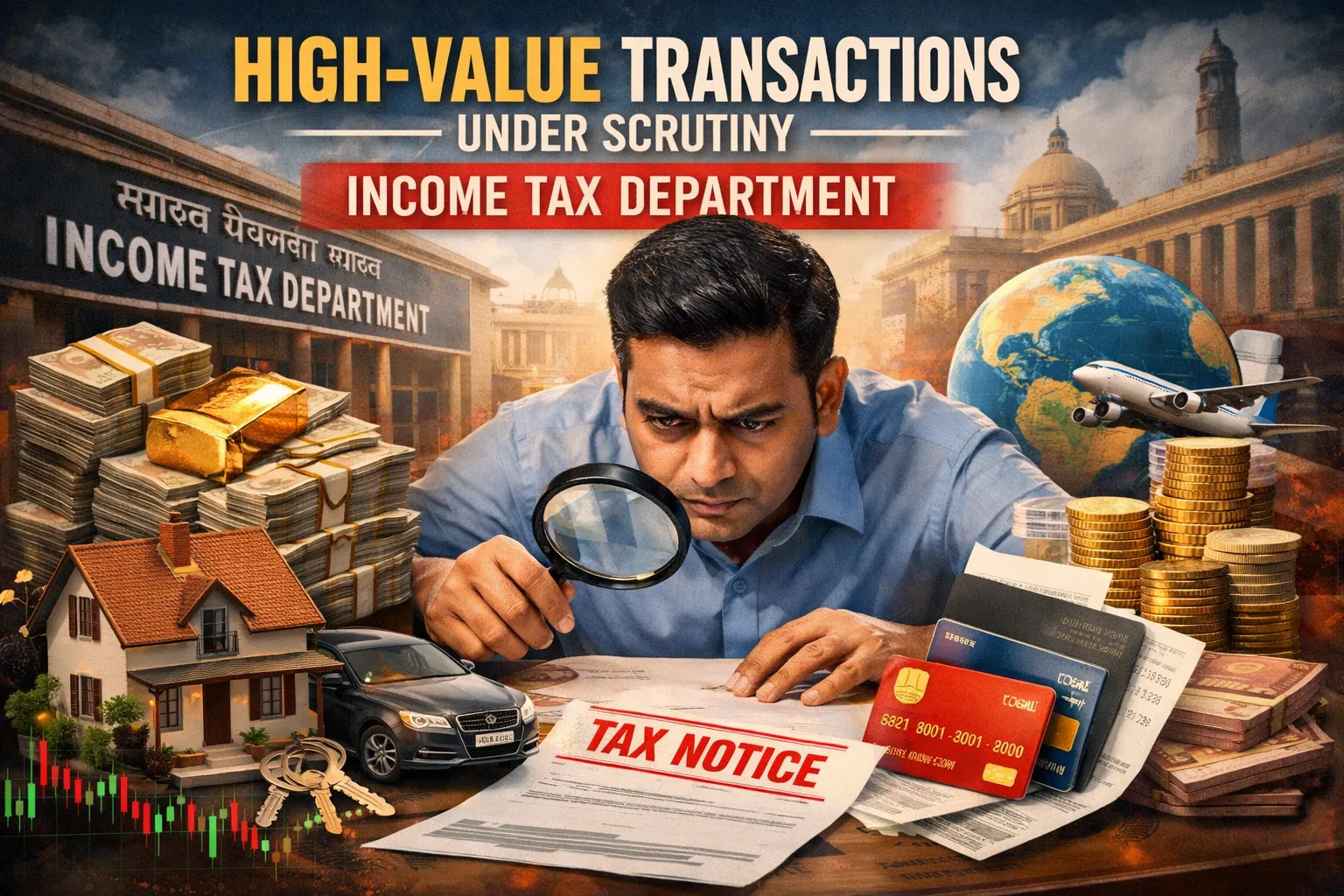
Many people unknowingly trigger income tax scrutiny due to high-value transactions. This article explains 10 transactions tracked by the Income Tax Department in India and how to stay compliant.
Tricky Tube’s Quick Summary
The Income Tax Department tracks several high-value financial transactions such as cash deposits, fixed deposits, property deals, credit card spending, investments, and foreign travel. Transactions crossing specified limits are automatically reported under Rule 114E. If these transactions don’t match your declared income, they may trigger tax scrutiny or notices. Maintaining proper records, avoiding unnecessary cash use, and filing an honest ITR can help you stay safe.
What Every Taxpayer Should Know to Avoid Notices and Penalties
In today’s digital banking era, it’s not just your income that matters -how you spend, invest, and move your money is equally important. Many people believe that unless they receive a tax notice, everything is fine. But in reality, several financial transactions are automatically tracked by the system. The Income Tax Department keeps a close watch on certain high-value transactions under specific rules. If you’re unaware of these limits, you could face unnecessary scrutiny, notices, or even penalties later. Below are the 10 major high-value transactions you should be careful about.
1.Investment in Fixed Deposits (FD)
If you invest ₹10 lakh or more in Fixed Deposits in a financial year, it is considered a high-value transaction. Additionally:
- For senior citizens, if FD interest exceeds ₹50,000 per year
- For others, if it crosses ₹40,000 per year The bank deducts TDS (Tax Deducted at Source) and reports the transaction. FD interest must always be declared in your Income Tax Return, even if TDS has already been deducted.
2.Cash Deposits or Withdrawals from Savings Accounts
If your total cash deposits or withdrawals exceed ₹10 lakh in a savings account during a financial year, it gets reported. The tax department is particularly strict about cash-based transactions, so large unexplained cash movements can raise red flags.
3.Cash Transactions in Current Accounts
This particularly applies to business owners. If cash deposits or withdrawals exceed ₹50 lakh in a year, the transaction is reported. Business owners should:
- Maintain proper books of accounts
- Keep clear debit and credit records
- File the correct ITR form for business income This transparency helps avoid future tax complications.
4.Demand Drafts (DD)
If you purchase Demand Drafts worth more than ₹10 lakh in a financial year, it qualifies as a high-value transaction and is reported to tax authorities.
5.Property Transaction
Property deals are closely monitored y the respected authority .
- If the stamp duty value exceeds ₹30 lakh, the registrar informs the tax department
- If the property value is above ₹50 lakh, the buyer must deduct 1% TDS Even a small mistake in property reporting can lead to serious tax issues later.
6.Cash Purchase of Gold or Cars
If you buy gold or a car using cash exceeding ₹2 lakh, providing your PAN card becomes mandatory. Large cash purchases almost always attract scrutiny.
7.Credit Card spending
Your credit card usage is also tracked.
- Annual spending above ₹10 lakh
- Cash payments exceeding ₹1 lakh via credit cards Such transactions can trigger questions if they don’t match your declared income.
8. Investments in Shares and Mutual Funds
If you invest more than ₹10 lakh in shares or mutual funds in a financial year, it is considered a high-value transaction. Also: Dividend income above ₹5,000 attracts TDS .Always maintain proper investment records.
9.Bonds and Debentures
Investments exceeding ₹10 lakh in bonds or debentures are also reported under high-value transaction rules.
10. Foreign Currency and Foreign Travel
If you:
- Purchase or hold foreign currency exceeding ₹10 lakh
- Spend heavily on foreign travel these transactions are monitored. In many cases, 5% TDS may apply on foreign remittances or travel expenses.
Common Mistakes That Create Trouble in Future
Many people unknowingly create problems by:
- Frequently transferring money between friends or relatives
- Making unnecessary debit and credit entries
- Receiving money without a clear source Any unexplained credit in your bank account can be treated as income, which may result in tax demands and penalties.
Legal Framework: Rule 114E
All these transactions are tracked under Rule 114E of the Income-tax Act, 1962, known as the Statement of Financial Transaction (SFT). Banks, registrars, mutual fund houses, and financial institutions are required to report such transactions automatically.
Always keep in Mind
- Avoid transactions you cannot justify later
- Maintain proper financial records
- Prefer banking channels over cash
- File your Income Tax Return honestly and accurately on time
FAQ
What are high-value transactions?
Large financial transactions that cross income tax limits and are automatically reported.
Are all bank transactions tracked?
No, only transactions crossing specified limits under tax rules are reported.
Does crossing a limit mean I’ll get a notice?
Not always-only if the transaction doesn’t match your declared income.
Why are cash transactions risky?
Because cash is harder to trace and attracts stricter scrutiny.
Is FD interest taxable even after TDS?
Yes, FD interest must be declared in your income tax return.
How much cash deposit is safe in a savings account?
Deposits above ₹10 lakh in a year are reported to the tax department.
Is credit card spending linked to income tax?
Yes, high annual spending or large cash payments are tracked.
Are mutual fund and share investments monitored?
Yes, investments above ₹10 lakh in a year are reported.
Can money from friends create tax issues?
Yes, unexplained or frequent transfers can be treated as income.
What is SFT in income tax?
SFT is a report of high-value transactions submitted by banks and institutions.
How can I avoid tax trouble?
Keep records, avoid heavy cash use, and file your ITR honestly on time