
International
February 5, 2026
Did the US Just Blink First? India's New Trade Deal with US: US cuts tariffs to 18%
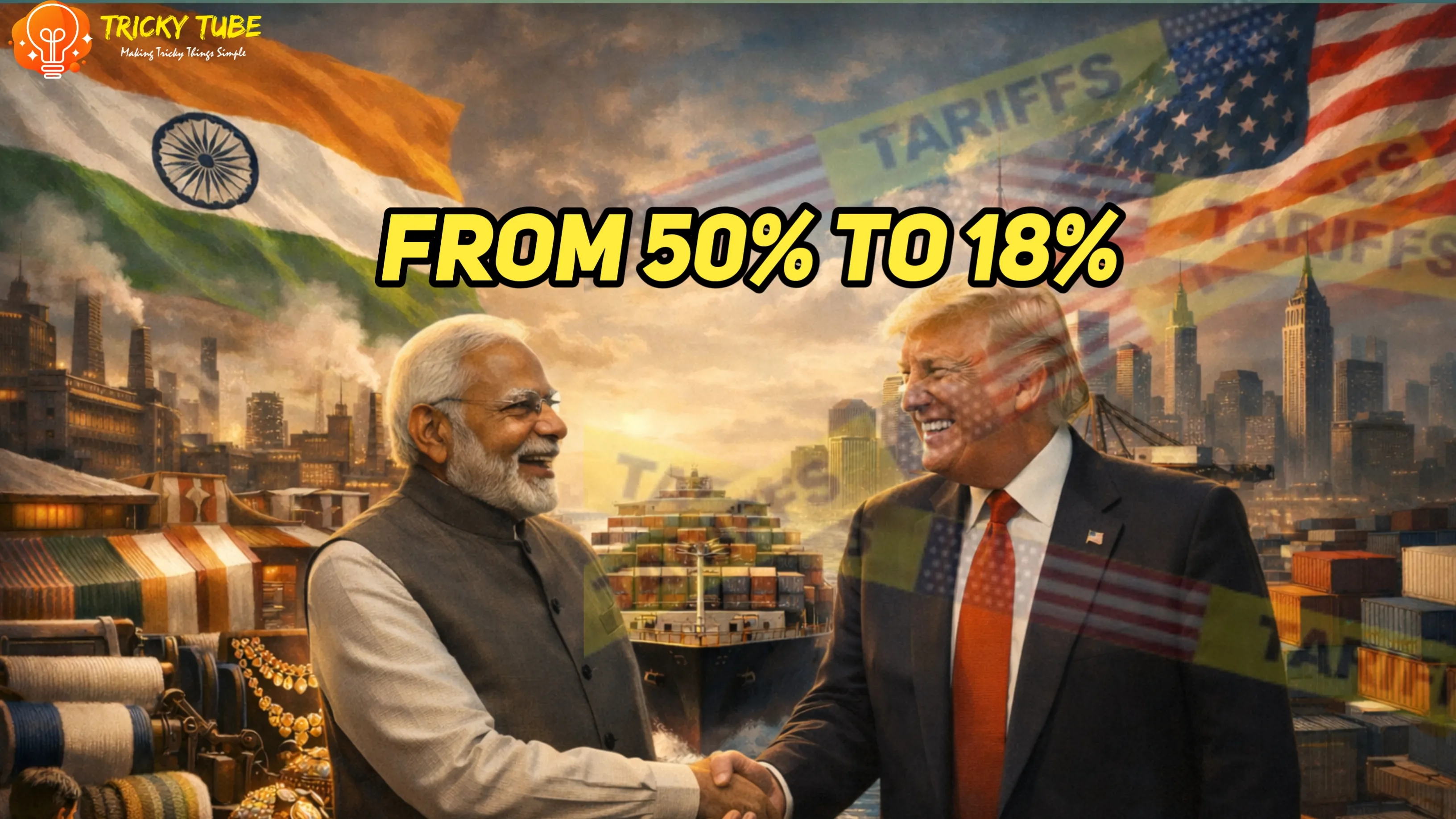
A sudden cut in US tariffs on Indian goods has quietly reshaped global trade equations. Behind the headlines lies a story of pressure, strategy, and India’s growing leverage in a fractured world economy
TrickyTube’s Quick Summary
A surprise US tariff rollback marks a major win for Indian exporters and signals a strategic reset in India–US relations. Triggered by India’s growing trade leverage—especially after its EU deal—the agreement strengthens India’s global standing while keeping key domestic sectors protected.
A Deal That Few Expected — And Almost No One Predicted This Way
What if I told you that the United States just slashed tariffs on Indian products from an eye-watering 50% to 18%—and did it faster than anyone imagined? For a relationship that had been tense for over a year, this move isn’t just economic housekeeping. It’s a signal. A loud one. After months of stalemate, backchannel talks, and geopolitical chess, India and the United States have landed a trade deal that could quietly reshape export markets, investment flows, and diplomatic power balances. And here’s the uncomfortable truth: this didn’t happen because of goodwill alone.
The Core of the Agreement: What Actually Changed?
At the heart of the deal lies a major tariff reset. The US has immediately reduced its reciprocal tariff on Indian products from 25% to 18%. More importantly, the additional 25% penalty tariff, imposed earlier due to India’s continued purchase of Russian oil, has been entirely scrapped. That’s not a cosmetic tweak. That’s US’s stepping back. This rollback follows nearly a year of negotiations that began after tariffs were sharply raised in 2025—an unprecedented move aimed at pressuring India’s energy choices. Until now, the message from the US was clear: comply or pay. India chose to wait.
What the US Wants — And What India Hasn’t Confirmed
US President Donald Trump has been vocal about what America expects next. According to his statements, India has allegedly agreed to:
- Remove tariffs and non-tariff barriers on most American goods
- Move toward near-zero tariffs
- Purchase $500 billion worth of US products, spanning energy, agriculture, technology, and heavy machinery
But here’s where it gets interesting. India has not officially confirmed these commitments. This silence matters. It suggests that India is deliberately keeping room to negotiate, adjust, or reinterpret obligations rather than locking itself into headline-driven promises. In trade diplomacy, what you don’t confirm can be as powerful as what you do.
How We Got Here: A Relationship Under Strain
To understand why this deal matters, we need context. Since 2025, India–US trade ties had been strained, largely due to India’s refusal to stop buying discounted Russian oil. The US response was blunt: a punitive 50% tariff. Instead of yielding, India diversified its trade strategy. It deepened engagement elsewhere—and that changed everything.
The Europe Factor That Forced US’s Hand
The real turning point wasn’t US. It was European Union. India’s recent trade agreement with the EU sent alarm bells ringing in the US. Preferential access for Indian goods into Europe meant a real risk of trade diversion—where American companies lose market share not because they’re inefficient, but because they’re late. Once Europe moved closer to India, the US faced a choice: re-engage or get sidelined. This deal is the result. Opinion: This article quietly confirms something important—India is no longer negotiating from weakness. It’s negotiating from options.
Who Gains the Most? Indian Exporters Are the Big Winners
The immediate beneficiaries are clear. Lower US tariffs make Indian goods significantly more competitive, especially in sectors like:
- Gems and jewelry
- Textiles and apparel
- Leather goods
- Industrial machinery
These industries now enjoy a pricing edge over competitors in Vietnam, Cambodia, Indonesia, and Pakistan—many of whom still face higher US tariffs. For exporters, this isn’t incremental relief. It’s a structural advantage.
Economic Ripple Effects: Markets, Money, and Manufacturing
Beyond exports, the deal is expected to:
- Attract fresh foreign investment into India
- Boost market sentiment and potentially equity indices
- Strengthen India’s manufacturing and supply-chain positioning
Yes, increased American imports could pressure some domestic industries. But India appears firm on protecting politically sensitive sectors like agriculture and dairy—a line it has consistently defended in global trade talks. Implication: India is signaling that openness does not mean surrender. Selective protection remains part of its playbook.
More Than Trade: A Strategic Reset
This agreement is being framed as a step toward strengthening the broader strategic partnership between India and the US. And that framing matters. Trade deals shape trust. Trust shapes alliances. As India aggressively pursues agreements with multiple countries—reflected clearly in its latest budget—it’s positioning itself as a central pillar in global supply chains rather than a peripheral player. The message is subtle but firm: India is open for business, but on negotiated terms.
FAQs
Why did the US reduce tariffs on Indian goods now?
The move followed prolonged negotiations and growing US concerns about losing trade share to Europe after India’s EU deal.
Did India agree to zero tariffs on US goods?
No official confirmation has been made by India regarding zero tariffs or a $500 billion purchase commitment.
Which Indian sectors benefit the most from this deal?
Gems and jewelry, textiles, leather goods, and machinery are expected to gain significantly.
Will this hurt Indian domestic industries?
Some pressure is possible, but agriculture and dairy remain protected under India’s trade stance.
Is this deal more economic or strategic?
Both. Economically beneficial, but strategically it signals renewed trust and alignment.