
International
January 15, 2026
A Storm Is Building in the Middle East -India has advised its citizens to leave Iran
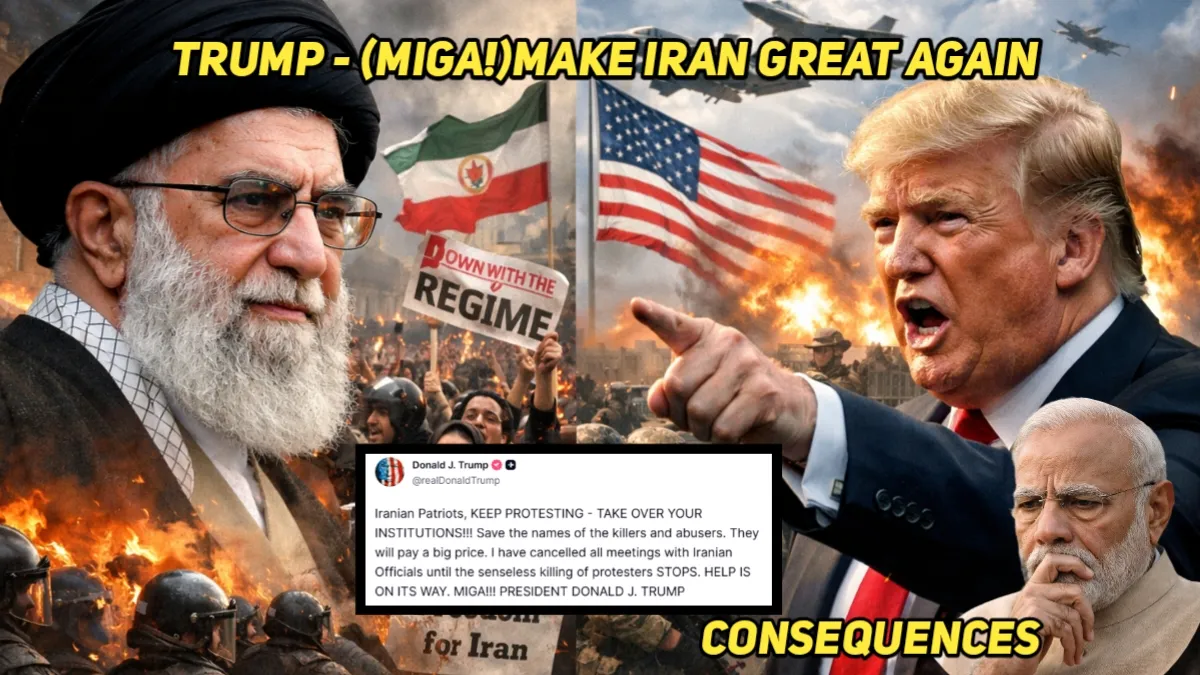
The USA–Iran standoff has entered a dangerous phase. Military evacuations, open threats, internal unrest in Iran, and a rare warning from Tehran’s embassy signal that this crisis is no longer distant geopolitics. For India, the risks are immediate, strategic, and impossible to ignore.
TrickyTube’s Quick Summary
Tensions between the United States and Iran are escalating rapidly. India has advised its citizens to leave Iran, US military bases are being evacuated, and Iran has issued direct warnings of retaliation. With major Indian investments like Chabahar Port at stake and the possibility of regime change in Tehran, New Delhi is watching every move closely.
Something Feels Different This Time
Middle East tensions are nothing new-but this time, the signals are unusually loud. When a global superpower starts clearing military bases and a regional power openly threatens counter-attacks across multiple countries, it usually means one thing: the situation has crossed the warning stage. The confrontation between the United States and Iran is no longer just diplomatic pressure. It’s moving toward a point where miscalculation could trigger something much bigger. For India, this isn’t a far-away conflict playing out on TV screens. It’s a crisis with real consequences.
Why India Asked Its Citizens to Leave Iran
India’s advisory urging all citizens to leave Iran immediately is a serious step. Governments issue such warnings only when they believe security conditions can worsen suddenly and without notice. India’s External Affairs Minister S. Jaishankar has been in continuous dialogue with Iranian authorities, reflecting how sensitive and important the situation is for India. Thousands of Indians live, work, or study in Iran, and ensuring their safety has become the top priority. This move also signals that India expects turbulence ahead-not calm diplomacy.
US Military Moves That Raise Alarms
One of the clearest indicators of escalation is the partial evacuation of US military bases in the Middle East. Such steps are typically taken only when:
- An attack is expected, or
- A major military operation is being planned Iran has responded by issuing an unusually blunt warning: if it is attacked, it will strike US bases located in Saudi Arabia, the UAE, and Qatar. This turns a bilateral confrontation into a potential regional war, pulling multiple Gulf nations into the equation. Once that happens, the conflict won’t stay contained.
Donald Trump’s Renewed Pressure on Iran
US President Donald Trump has added another layer of uncertainty with strong public warnings against Iran. His statements suggest that US may not just be pressuring Iran diplomatically, but actively preparing for a more direct role. What stands out is the framing of these warnings-linking possible action with support for Iranian protesters. This signals a shift from opposing Iran’s policies to potentially challenging its leadership itself. That distinction could change everything.
Iran’s Internal Crisis Is Deepening
While external pressure mounts, Iran is facing serious unrest at home. Anti-government protests have spread across the country, and reports of casualties vary widely. Confirmed figures suggest over 2,000 deaths, while some Western media outlets claim the toll could be far higher (like more than 10,000). Regardless of the exact number, one fact is clear: Iran is under immense internal strain. History shows that when internal unrest and external threats collide, political systems often face breaking points.
Why Chabahar Port Matters So Much to India
India’s biggest strategic concern in Iran is the Chabahar Port. This port is not just an infrastructure project-it’s a geopolitical lifeline. Chabahar allows India access to Afghanistan and Central Asia while bypassing Pakistan entirely. Any instability in Iran, prolonged conflict, or regime change could put this long-term investment at risk. If Iran’s political structure changes, existing agreements may be reviewed, delayed, or even scrapped.
A Rare Warning From Iran’s Embassy in India
In a highly unusual move, the Iranian Embassy in India issued a strong public statement criticizing unilateral US actions. The message accused US of:
- Undermining the global order
- Withdrawing from dozens of international institutions, including UN bodies
- Increasing global instability by forcing silence instead of dialogue More importantly, the statement warned that no country-big or small, rich or developing-will remain unaffected. This was widely seen as a subtle but firm message to nations like India: neutrality may not shield anyone from the consequences.
What If Iran’s Government Changes?
If military action or internal unrest leads to regime change, India would be forced to re-evaluate its entire Iran policy. A new government in Iran could realign alliances, renegotiate projects, and alter regional dynamics overnight. For India, this would mean starting from scratch diplomatically-at a time when regional stability is already fragile.
Why This Crisis Goes Beyond the Middle East
This situation isn’t just about Iran and the US.
- Any major escalation could:
- Disrupt global energy markets
- Destabilize the Gulf region
- Impact Indian trade routes and investments
- Force India into difficult diplomatic balancing acts By acting early-issuing advisories and maintaining dialogue-India is signaling that it understands how high the stakes are.
FAQs
Why is the USA evacuating military bases?
Such evacuations usually happen when an attack is anticipated or a major operation is being planned.
Why is Chabahar Port critical for India?
It gives India strategic access to Central Asia and Afghanistan while bypassing Pakistan.
Is a US–Iran war confirmed?
No, but multiple indicators suggest the risk of escalation is significantly higher than normal.
How could this affect India directly?
Through risks to Indian citizens, strategic investments, energy security, and regional stability.
Why did Iran’s embassy issue such a strong warning?
To signal that unilateral actions by powerful nations can destabilize the entire global order.