
International
February 16, 2026
Will 2026 Be the Year the Middle East Ignites? Trump’s “Worst Day for Iran” Threat Explained
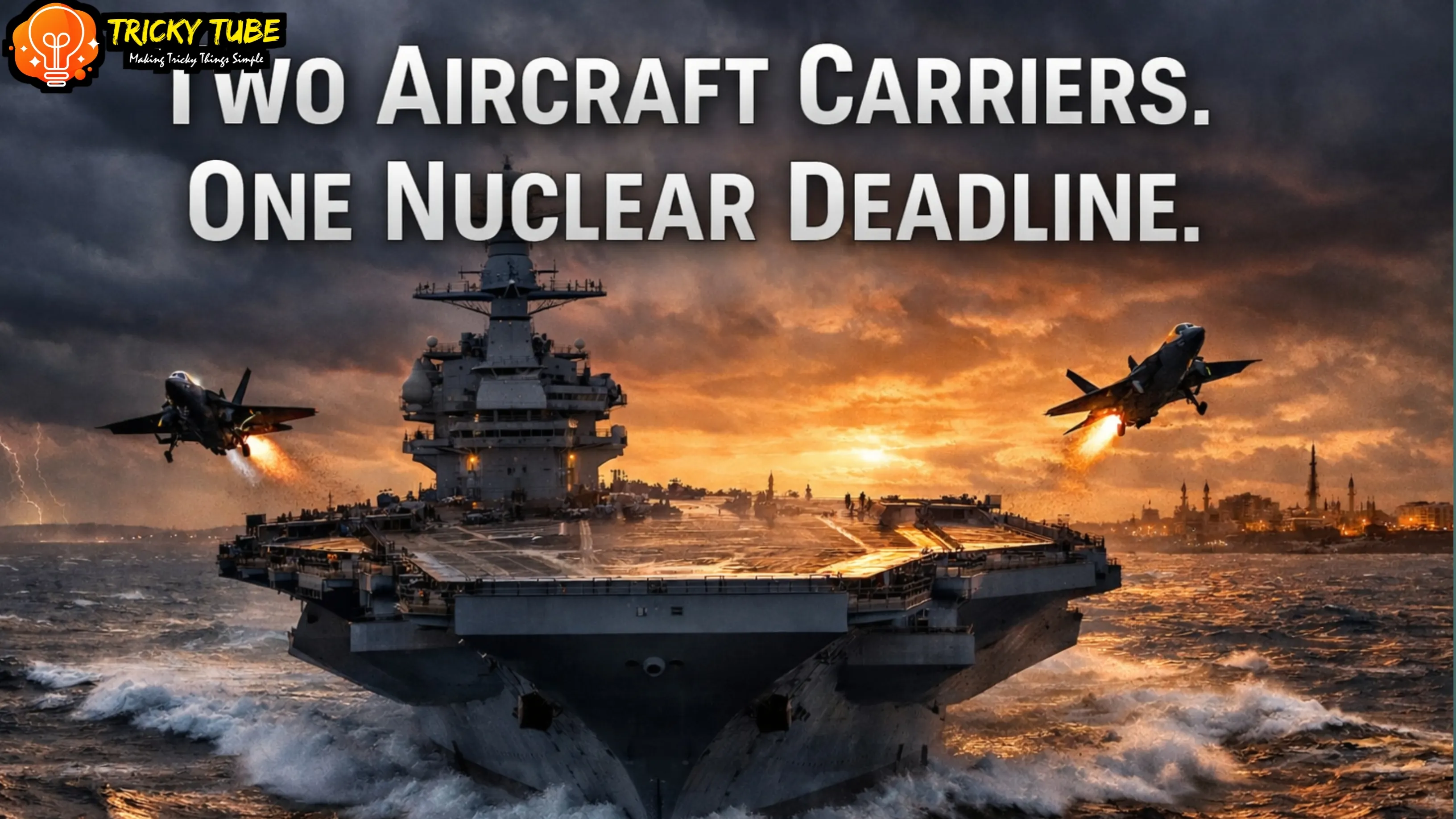
Is the world standing on the brink of a fresh Middle Eastern conflict? With President Donald Trump warning of a “very bad day for Iran” and sending a growing U.S. military armada toward West Asia, tensions that once simmered are heating up — and the stakes couldn’t be higher. This blog unpacks what’s really at play, from diplomacy’s deadlock to the geopolitical domino effect that could reshape global peace.
TrickyTube’s Quick Summary
Forget superficial headlines — the U.S. and Iran are not merely “disagreeing at a negotiation table.” The conflict has escalated into a full-blown strategic standoff:
- Trump has openly signaled military coercion if talks collapse.
- The U.S. is deploying multiple aircraft carriers to West Asia — including the massive USS Gerald R. Ford.
- Israel is demanding Iran halt its missile program and proxy support.
- Gulf markets are jittery amid the threat of conflict escalation.
- Iran still insists its nuclear program is peaceful, but internal pressures and economic strain complicate its response.
Could the next big war start not from a battlefield clash — but a failed negotiation? As 2026 unfolds, President Trump’s toughest warning yet to Iran — that a diplomatic breakdown would spell “a very bad day” for Iran — is reshaping global security calculations. This is not just rhetoric; it’s a rare presidential threat tied directly to military positioning and political pressure.
Diplomacy on Thin Ice — and Flights of Warships
Despite talks taking place in Oman and now in Geneva, fundamental disagreements block progress. The U.S. wants Iran to end uranium enrichment and the ballistic missile program. Tehran says it will negotiate but wants sanctions lifted first.
Instead of backing down, the U.S. has intensified both diplomatic and military pressure. One aircraft carrier strike group — the USS Abraham Lincoln — is already in the region. A second — the USS Gerald R. Ford, the world’s largest carrier — is reportedly sailing toward West Asia as a deterrent and leverage.
This is an unusual mix of negotiation and threat: diplomacy on one hand, and a looming armada on the other.
Trump’s Tactical Narrative — War or Win?
What’s striking is not just the deployment of forces — it’s the political framing. Trump is echoing a familiar script: paint Iran as unstable and dangerous, then suggest that military pressure is the only real solution — the same strategy used in past U.S. foreign engagements. This time, he’s gone a step further by publicly stating that regime change in Iran might be “the best thing.”
This is not mere brinkmanship — it’s a calculated tactic to force concessions. But it carries a huge risk: if Tehran feels cornered, it could respond not with negotiation — but escalation.
The Wider Web of Regional Players
Iran’s stance is deeply interconnected with regional power dynamics:
- Israel is not just a spectator. Prime Minister Netanyahu wants any deal to also eliminate Iran’s ballistic missiles and end support for militias like Hezbollah. That’s a critical divergence from the U.S. strategy, which has emphasized nuclear limits first.
- Gulf nations, from Saudi Arabia to Qatar, are increasingly cautious as oil routes like the Strait of Hormuz face disruption risks. Trade and energy markets have already reacted negatively to the uncertainty.
- Meanwhile, Iran’s internal turmoil — including massive protests and a deepening economic crisis — adds fuel to the fire, creating not just a foreign policy puzzle but a domestic tinderbox.
Opinion: What This Means for Global Stability
Here’s the uncomfortable truth: the world could soon be facing a crisis greater than 2020 and 2021 combined. If U.S.–Iran diplomacy fails and military force becomes part of the equation, the impact could ripple from oil markets to worldwide defense alliances.
Even if war doesn’t break out, this level of saber-rattling undermines diplomatic norms — it makes negotiation a gamble, not a solution.
FAQs
Q: Why is the U.S. moving aircraft carriers?
A: To signal military readiness and use presence as leverage in nuclear negotiations.
Q: Are nuclear talks still happening?
A: Yes — indirect talks continue in Geneva and past rounds took place in Oman.
Q: What conditions is the U.S. demanding?
A: Complete cessation of nuclear enrichment and limits on ballistic missiles.
Q: What happens if negotiations fail?
A: Trump has warned of severe consequences, implying military options are on the table.
Q: How is the region reacting?
A: Gulf markets are cautious, and Iran is positioning itself defensively.