
International
February 15, 2026
China’s Zero-Tariff Bombshell in Africa: A Trade Reset That Could Reshape India’s Strategic Calculus
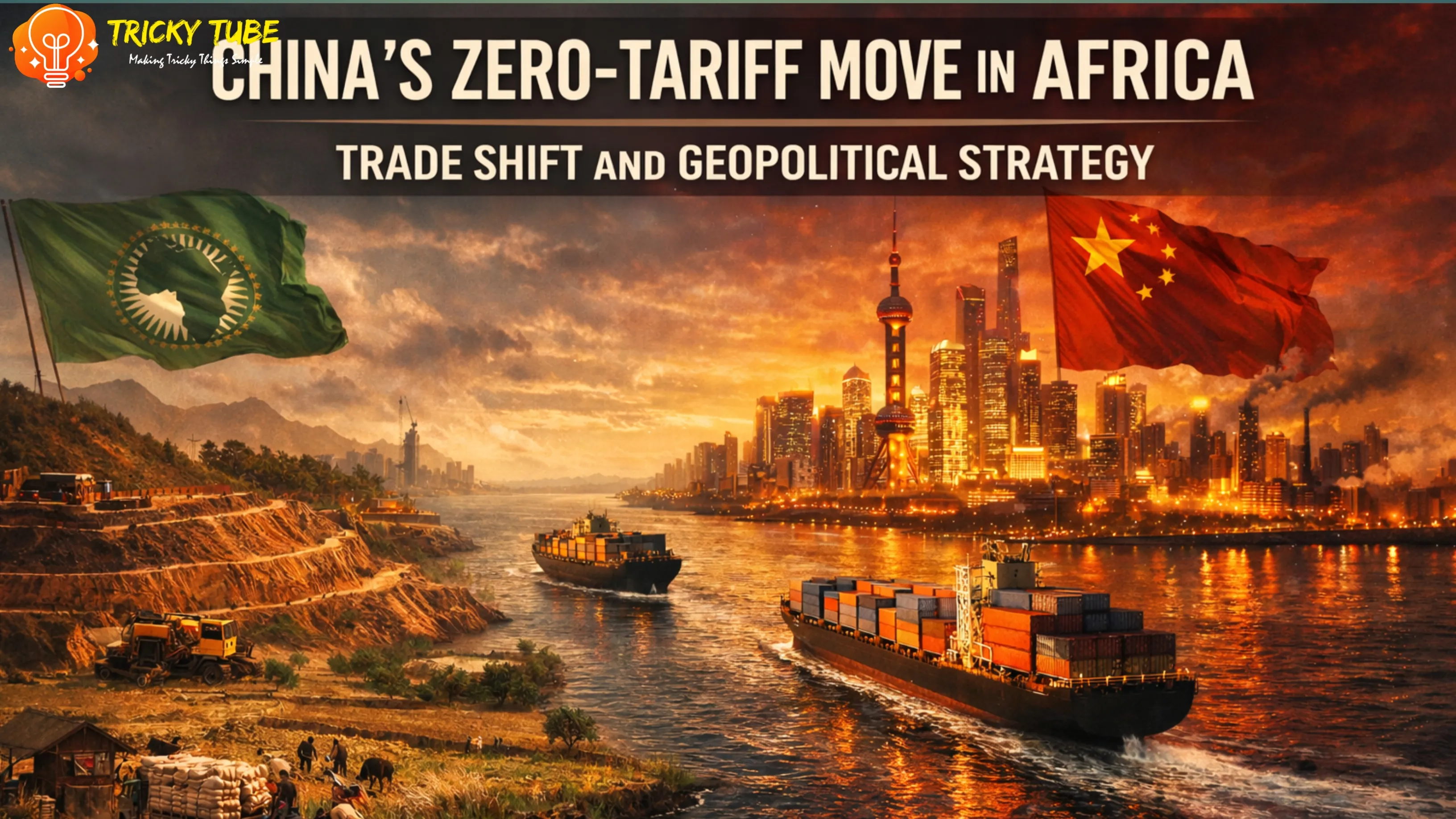
China’s decision to eliminate tariffs on imports from 53 African nations isn’t just a trade policy shift - it’s a geopolitical statement. As China tightens its grip on African supply chains and minerals, the ripple effects could quietly reshape India’s export markets, raw material access, and Indian Ocean strategy.
TrickyTube’s Quick Summary
- China removes tariffs on imports from 53 African nations starting May 1.
- This is the largest zero-duty expansion in recent trade history.
- African exports become cheaper and more competitive in China.
- China strengthens its Global South leadership narrative.
- India faces indirect risks in minerals, exports, and strategic influence.
When a global superpower removes tariffs on an entire continent, it’s not charity — it’s strategy.
Starting May 1, China will implement a zero-tariff policy on goods from 53 out of 54 African nations, excluding only Eswatini due to its diplomatic ties with Taiwan. The move marks one of the broadest trade liberalization initiatives in modern history and signals Beijing’s deeper intent: to consolidate influence across the Global South.
This announcement, strategically timed ahead of an African Union summit, expands a previous policy that covered only 33 least-developed African countries. Now, almost the entire African continent gets duty-free access to the world’s second-largest economy.
That’s not a trade tweak. That’s a structural shift.
What Zero Tariffs Actually Mean for Africa
By removing import duties, China effectively lowers the cost of African agricultural products, minerals, and manufactured goods entering Chinese markets. For African exporters, this translates into:
- Greater price competitiveness
- Higher export volumes
- Improved trade balances
- Increased integration into global supply chains
From copper in Zambia to cobalt in the Democratic Republic of Congo, from cocoa in West Africa to manufactured components from emerging industrial hubs — the door to China is now wider than ever.
In theory, this strengthens Africa’s bargaining power globally. In practice, it tightens China’s economic embrace.
China has long pursued economic integration through initiatives like the Belt and Road Initiative, building ports, railways, and energy projects across Africa. Tariff elimination complements that infrastructure strategy by ensuring trade flows remain anchored to China.
This is not just commerce. It’s ecosystem building.
The Bigger Play: Global South Realignment
China increasingly positions itself as a dependable partner compared to Western economies. By expanding zero-duty access, China strengthens its narrative as the economic champion of the Global South — a bloc including Africa, South America, and parts of Asia.
The policy also subtly shifts global trade dynamics. If African exports are increasingly absorbed by China, Western influence over African supply chains could weaken. More importantly, pricing power over critical minerals could tilt toward Beijing.
And that’s where the story becomes highly relevant for India.
Why India Should Pay Close Attention
India is not the direct target of this policy — but it could become one of its indirect casualties.
Africa is India’s fourth-largest export destination, with strong trade in pharmaceuticals, automobiles, machinery, and textiles. Indian companies have spent decades building distribution networks and goodwill across African markets.
If China strengthens economic ties through preferential access, financing, and trade integration, African countries may gradually orient their trade ecosystems toward China.
There are three major implications for India:
1. Raw Material Access Risk
India depends on African nations for essential minerals such as copper, cobalt, and gold — crucial for electronics, renewable energy infrastructure, and electric vehicles.
If China becomes the dominant buyer of these resources, supply availability for India could tighten. Prices may rise. Long-term contracts may favor Chinese firms. Strategic leverage could shift.
2. Cost Competitiveness Gap
Cheap African raw materials flowing into Chinese factories can lower manufacturing costs in China. That would allow Chinese exports — from electronics to machinery — to become even more competitive globally.
Indian exporters could face intensified price pressure, especially in third-country markets.
3. Indian Ocean Strategic Concerns
Expanded trade flows mean increased maritime activity. Greater Chinese commercial presence in Africa often correlates with stronger logistical and port footprints across the Indian Ocean.
While framed as economic cooperation, the geopolitical undertone is hard to ignore. Trade routes often precede strategic influence.
A Subtle but Powerful Shift
On paper, zero tariffs sound like an economic win-win. And for many African economies, it may genuinely open new growth pathways.
But power in global trade isn’t only about tariffs. It’s about who controls demand, infrastructure, financing, and pricing.
China is methodically aligning all four.
India’s response cannot be reactive. It may need:
- Faster trade agreements with African blocs
- Stronger mineral supply partnerships
- Competitive financing alternatives
- Deeper diplomatic engagement
If India treats this as just another trade headline, it risks waking up to a very different geopolitical map a decade from now.
FAQs
Why did China remove tariffs on African imports?
China aims to strengthen economic ties with Africa, deepen supply chain integration, and position itself as a key partner in the Global South.
Which country is excluded from the zero-tariff policy?
Eswatini is excluded because it maintains diplomatic relations with Taiwan.
How does this affect India?
India could face higher mineral prices, increased competition in exports, and reduced strategic access to African markets.
Is this purely an economic move?
While presented as trade liberalization, the timing and scale suggest a broader geopolitical strategy.