
International
February 14, 2026
India’s Passport Jumps 10 Ranks -But Here’s the Twist No One Is Talking About
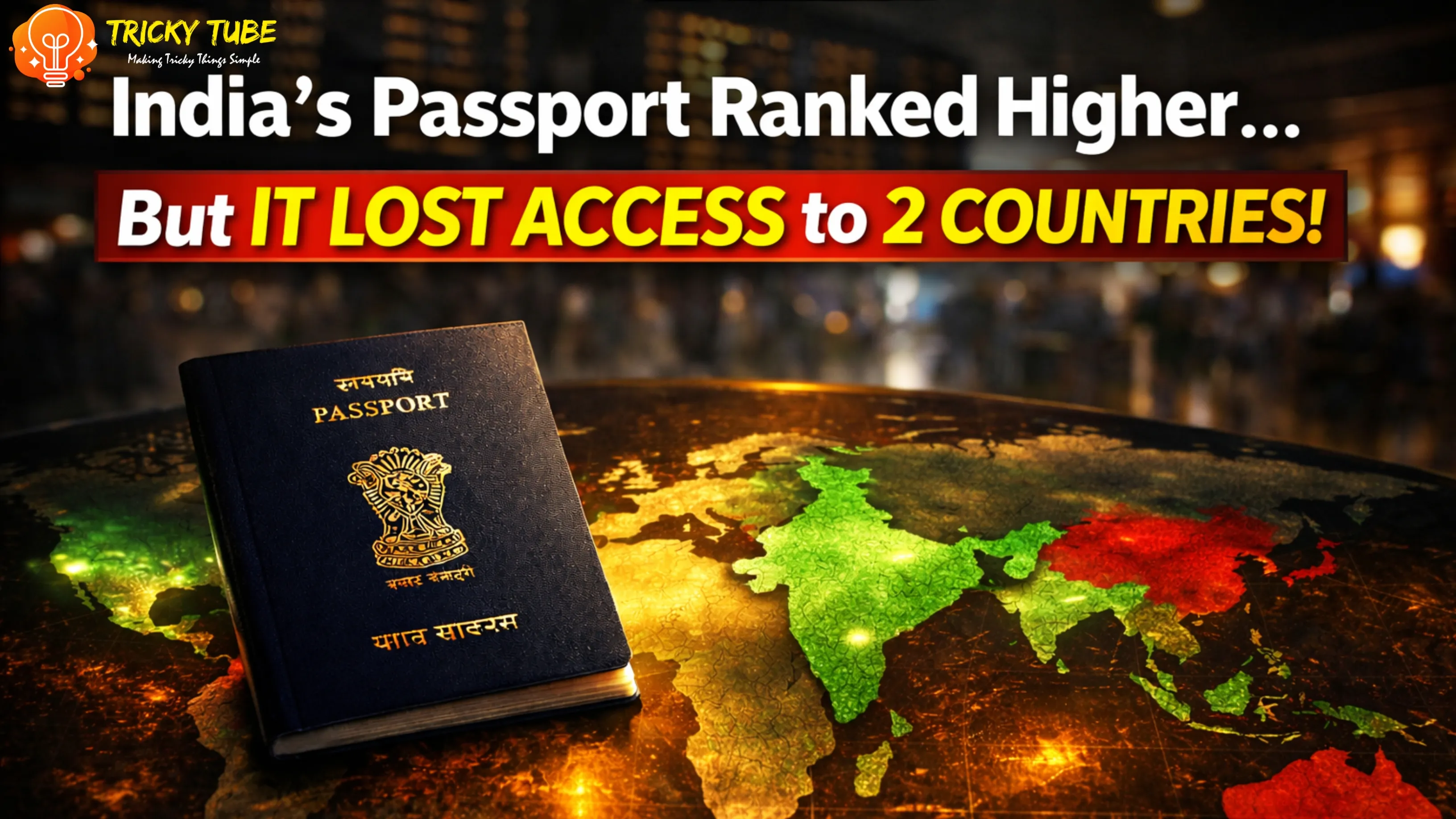
India climbed 10 ranks in the Henley Passport Index 2026-but lost visa-free access to two countries. Here’s what the ranking really means, why it happened, and what India must do to genuinely strengthen its global mobility power.
Trickytube’s Quick Summary
- India jumped from 85th to 75th in 2026 Passport Index
- Visa-free access reduced from 57 to 56 countries
- Rank improved because other countries declined more
- Iran and Bolivia restricted access; Gambia added visa-free entry
- Real passport strength depends on trust, migration control, and bilateral diplomacy
- Strategic negotiations and overstay control are key to future gains
How Did India Climb the Henley Passport Index 2026 Despite Losing Visa-Free Access?
India just jumped 10 spots in the Henley & Partners Passport Index 2026, climbing from 85th to 75th position. Sounds like a diplomatic victory, right?
But here’s the uncomfortable twist: India actually lost visa-free access to two countries this year.
Yes — the passport rank improved… even though access shrank.
So what’s really going on?
Understanding the Henley Passport Index
The Henley & Partners Passport Index ranks countries based on how many destinations their citizens can enter without a prior visa, or with:
- Visa-on-arrival
- Electronic Travel Authorization (ETA)
Important detail:
E-visas and embassy-issued visas do not count toward the ranking.
This means if a country switches from visa-on-arrival to e-visa approval before travel, that destination no longer contributes to the score — even if travel is still technically allowed.
And here’s the key nuance many miss:
A country’s rank can rise even if its access remains the same — or declines — if other countries fall harder.
That’s exactly what happened in India’s case.
Why India’s Rank Improved (Without Gaining Access)
India’s visa-free/visa-on-arrival access dropped from 57 countries to 56.
So how did the ranking improve?
Because several countries that were previously ranked above India saw steeper declines in their visa-free access due to global migration tightening, security concerns, and geopolitical instability.
In other words:
India didn’t climb because it sprinted ahead.
It climbed because others stumbled harder.
That distinction matters.
Countries That Changed Their Visa Policies for Indians
🇮🇷 Iran
Iran discontinued visa-free entry for Indian citizens.
The reported reasons include rising concerns over human trafficking networks and fake overseas job rackets misusing tourist entry channels.
This wasn’t just a policy shift — it reflected deeper migration control anxieties.
🇧🇴 Bolivia
Bolivia shifted from visa-on-arrival to mandatory pre-approved e-visa.
Since e-visas don’t count in the Henley methodology, India effectively lost one score point.
🇬🇲 Gambia
On the positive side, Gambia granted visa-free entry to Indian passport holders.
A small but symbolic diplomatic gain.
The Bigger Picture: Passport Power Is About Trust
A passport’s strength isn’t just about tourism. It’s about global trust metrics.
Visa-free agreements depend on:
- Bilateral relations
- Migration compliance
- Overstay statistics
- Security risk perception
- GDP per capita
- Political stability
Let’s be honest: mobility is now geopolitical currency.
Countries today are far more cautious about irregular migration and asylum abuse. Even developed nations are tightening entry rules.
India’s global image is rising economically — but mobility agreements lag behind that growth story.
And that gap is the real issue.
What India Can Do to Strengthen Its Passport
If India wants sustained improvement (not accidental rank jumps), strategy matters.
Focused Visa Negotiations
Instead of chasing big Western nations immediately, India could target 20–25 small-to-medium countries in:
- Southeast Asia
- Africa
- Caribbean
These nations often seek tourism inflow and trade partnerships. Reciprocal visa-free agreements here can quickly improve score metrics.
Reciprocal Mobility Packages
India can bundle:
- Tourism promotion
- Investment incentives
- Trade agreements
with visa facilitation offers.
Mobility should be integrated into trade diplomacy, not treated separately.
Crack Down on Overstays
This is uncomfortable but necessary.
Overstay data plays a major role in visa negotiations. Stricter tracking systems and transparent compliance records can significantly improve India’s credibility in negotiations.
Accelerate Biometric E-Passports
India has already started rolling out biometric e-passports.
Full nationwide implementation can strengthen document security perception globally.
Security confidence = mobility confidence.
Leverage the 35 Million Strong Indian Diaspora
India’s global diaspora is a massive soft-power asset.
Structured diaspora diplomacy — beyond cultural events — can help improve bilateral trust frameworks.
Mobility isn’t just paperwork. It’s relationship capital.
My Take: A Rank Jump Isn’t the Same as Mobility Growth
India’s 10-place rise is encouraging. But it’s not a breakthrough.
The real metric that matters is how easily an average Indian can travel for work, study, and business without bureaucratic friction.
Until visa-free numbers consistently rise, ranking improvements will feel cosmetic.
That said — the global mobility environment is tightening for many countries. So India holding steady (and relatively climbing) isn’t insignificant.
But the next leap must be strategic — not accidental.
FAQs
Q1: Why did India’s passport rank improve despite losing access?
Because other countries experienced sharper declines in visa-free access, causing India to move up comparatively.
Q2: Do e-visas count in the Henley Passport Index?
No. Only visa-free, visa-on-arrival, and ETA access are counted.
Q3: Which countries stopped visa-free access for Indians in 2026?
Iran discontinued visa-free entry, and Bolivia shifted to mandatory e-visa approval.
Q4: Is India’s passport actually getting stronger?
Not significantly in terms of raw visa-free access. The ranking improved mainly due to global reshuffling.