
International
February 11, 2026
India Seizes Iranian-Linked Tankers: What it Means for Middle East Tensions
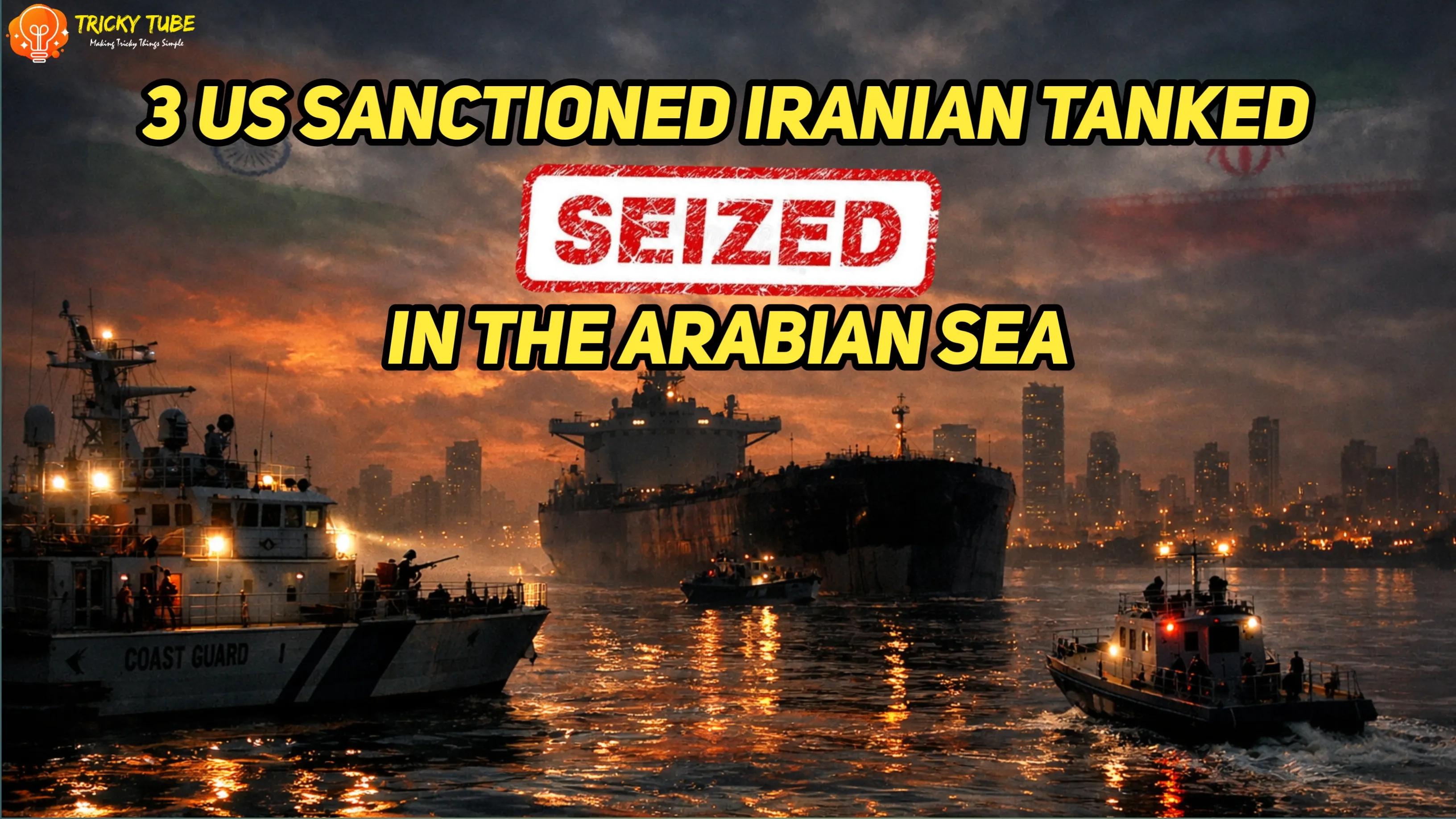
India’s seizure of three “dark fleet” oil tankers near Mumbai may look like a routine maritime enforcement action. It isn’t. This single move has tied India into a much larger geopolitical chessboard involving Iran, the United States, Israel, and the future of oil sanctions enforcement.
TrickyTube’s Quick Summary
- India seized three Iranian-linked oil tankers for the first time
- The vessels were part of the global “dark fleet”
- Official reasons: illegal activity and tax evasion
- Unofficial context: rising US pressure on Iran
- Netanyahu’s US visit signals growing military tension
- India’s move subtly reshapes regional power dynamics
What happens when a country known for strategic restraint suddenly makes a move that rattles the Middle East’s underground oil economy?
On February 6, India quietly crossed a line it had never crossed before - and the ripple effects are now visible far beyond the Arabian Sea.
For the first time in its maritime history, India intercepted and seized three oil tankers operating illegally inside its Exclusive Economic Zone (EEZ). These weren’t ordinary ships. They were part of the so-called “dark fleet” — a shadowy network of vessels used to move sanctioned oil, primarily from Iran, without detection.
The operation took place off the Mumbai coast, and according to Indian authorities, the vessels were involved in illegal economic activity and tax evasion. Notably, Iranian media themselves confirmed the oil onboard originated from Iran — an admission that added fuel to an already sensitive situation.
On paper, this was a customs and maritime law enforcement action. In reality, it was far more than that.
Why This Seizure Feels Different
India has long walked a diplomatic tightrope: maintaining energy ties with Iran while deepening strategic relations with the United States. What makes this episode stand out is timing.
The seizures happened amid:
- Fresh US sanctions on Iranian oil companies and vessels
- Increased US military presence in the Persian Gulf
- A visible surge in US cargo aircraft movements across the region
India did not cite US sanctions as the reason. That omission feels deliberate. But geopolitics rarely works on official statements alone. The implication is hard to miss: India may be signaling alignment without openly saying so.
In my view, this is classic strategic ambiguity — act decisively, speak cautiously.
Inside the Dark Fleet Playbook
The “dark fleet” doesn’t just hide — it disappears and reappears.
These vessels typically:
- Switch off tracking systems
- Conduct ship-to-ship oil transfers in international waters
- Change ship names, flags, and ownership records
- Enter regional waters posing as legitimate traders
The goal is simple: move oil, avoid sanctions, skip taxes, and vanish before regulators connect the dots.
By acting inside its EEZ, India chose a legally strong battleground. That’s important. It reduces diplomatic blowback while asserting maritime sovereignty.
The US–Iran Pressure Cooker
The tanker seizures align almost perfectly with US’s renewed push to choke Iran’s oil revenue. The United States has imposed new sanctions targeting:
- Iranian shipping firms
- Individual tankers
- Insurance and logistics networks supporting oil exports
This isn’t just economic pressure — it’s strategic containment.
And India’s move, intentional or not, strengthens that pressure. It sends a message: sanctions evasion routes are shrinking, even in regions once considered diplomatically flexible.
Netanyahu’s Steps into US at a Pivotal Moment
Adding another layer to the moment, Benjamin Netanyahu made an unplanned emergency visit to the US, meeting Donald Trump.
According to reports, this wasn’t a routine diplomatic courtesy. It was described as a “strategic shaping session.”
The agenda reportedly included:
- Iran nuclear negotiations
- Contingency plans if talks collapse
- Possible military options
Israel’s position hasn’t softened. Netanyahu believes current agreements merely delay, not dismantle, Iran’s nuclear ambitions. Israel wants:
- A permanent end to uranium enrichment
- Dismantling of Iran’s ballistic missile capabilities
Fail that, Israel increasingly sees military action as inevitable.
Where India Quietly Fits Into This Equation
India is not a loud player in Middle East military politics — and that’s exactly why this move matters.
By cracking down on Iranian-linked oil operations without dramatic announcements, India:
- Reinforces its image as a rule-based maritime power
- Signals reliability to Western partners
- Protects its EEZ without publicly escalating tensions
There is also a domestic angle. Allowing untaxed, illicit oil flows undermines India’s own revenue and regulatory framework. From that lens, this action was overdue.
But strategically? It places India closer to the enforcement side of global sanctions, whether India admits it or not.
What Happens Next?
Expect three things:
- More scrutiny of shipping near Indian waters
- Increased caution among dark fleet operators
- Quiet diplomatic conversations between India, Iran, and Western capitals
This isn’t India choosing sides outright. It’s India choosing order over ambiguity in its maritime backyard.
And in today’s geopolitics, that’s a powerful statement.
FAQs
Q1. What is a “dark fleet”?
A network of ships that move sanctioned oil by hiding ownership, switching flags, and disabling tracking systems.
Q2. Did India act because of US pressure?
Officially, no. Strategically, the timing suggests alignment with broader sanctions enforcement.
Q3. Is India risking relations with Iran?
Short-term discomfort is likely, but India acted within international law, limiting diplomatic fallout.
Q4. Will such seizures increase in the future?
Highly likely, especially as sanctions enforcement tightens globally.