
International
February 10, 2026
India Is Quietly Re-Entering West Asia — And This Trade Deal Could Change Everything
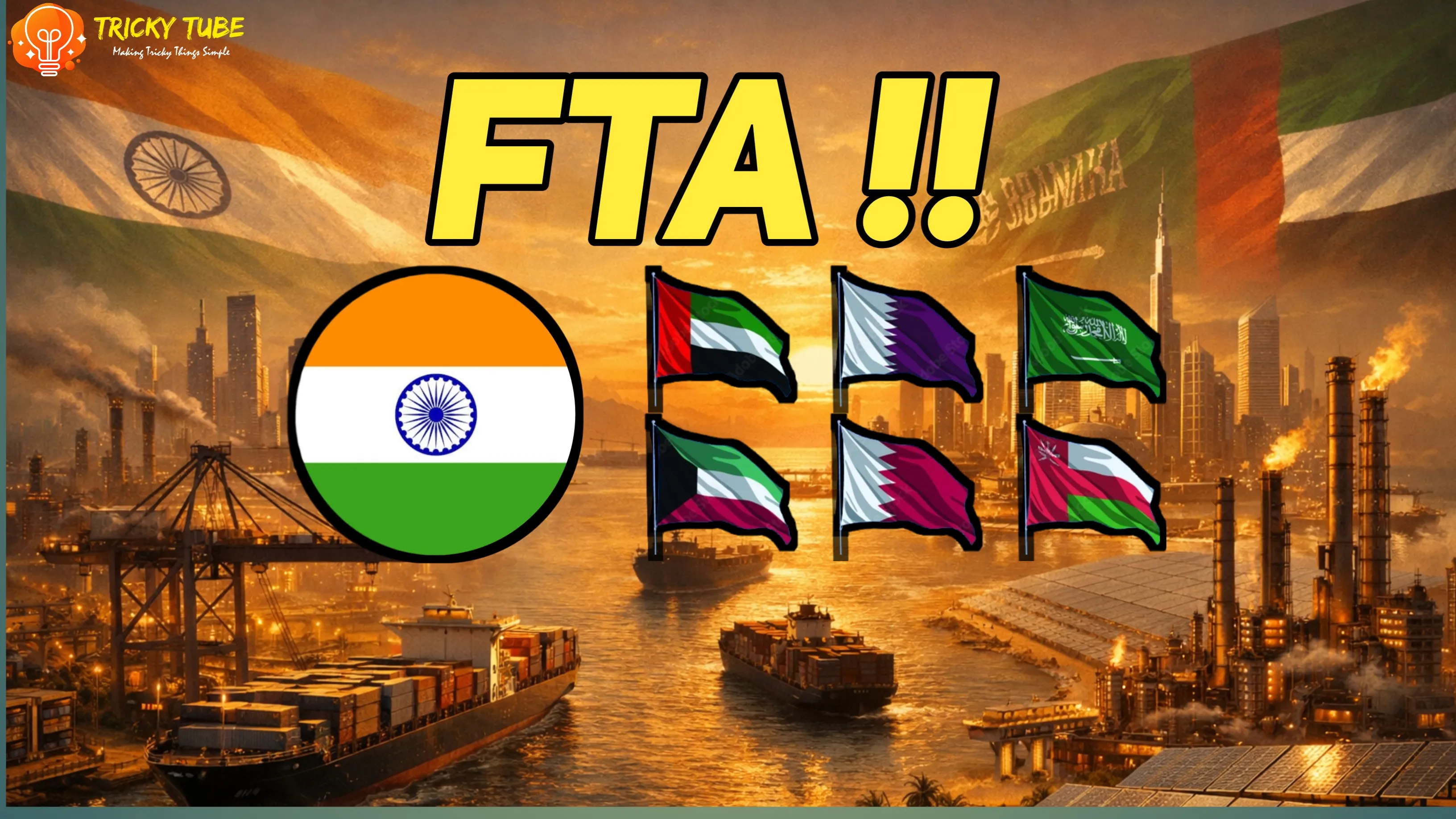
After 14 years of silence, India and the Gulf Cooperation Council are back at the negotiation table. This renewed FTA push is not just about trade numbers—it’s about geopolitics, energy security, and India’s long-term economic muscle in a fragmented global order.
TrickyTube’s Quick Summary
India has restarted long-pending FTA talks with the GCC to rebalance trade, secure energy, attract Gulf investments, and strengthen its strategic position in a fragmented global economy-this time with sharper safeguards and smarter priorities.
The deal that went cold for 14 years is suddenly back. Why now-and why does it matter so much?
In a world where global trade rules are slowly breaking down, India has made a calculated move that most people are still underestimating. After a 14-year pause, India has officially restarted Free Trade Agreement talks with the Gulf Cooperation Council—a bloc that controls energy flows, shipping routes, capital, and strategic influence across West Asia. This isn’t a routine trade negotiation. It’s a signal. India and the GCC have signed the Terms of Reference (ToR), which effectively unlocks formal negotiations that were frozen back in 2011. Since then, the world has changed—and so has India’s position in it.
Why the GCC Actually Matters More Than Europe for India
The GCC includes Saudi Arabia, UAE, Qatar, Kuwait, Bahrain, and Oman-six countries that punch far above their size. Together, they form:
- One of the world’s largest energy hubs
- A key artery of global shipping and logistics
- Home to massive sovereign wealth funds
- A region hosting millions of Indian workers
In fact, the GCC is already India’s largest regional trading partner. Total trade stands at roughly $175–180 billion, but here’s the imbalance: India exports about $55 billion, while imports exceed $120 billion, mainly oil and gas. That gap is precisely what this FTA is designed to rebalance.
The Global Trade System Is Cracking-and India Knows It
One uncomfortable truth is rarely said out loud: the global trade referee is no longer functional.
The dispute settlement mechanism of the World Trade Organization has weakened, protectionism is rising, and countries are increasingly choosing bilateral and regional FTAs over global rules.
India’s renewed GCC push fits perfectly into this new reality. Instead of waiting for broken multilateral systems to heal, New Delhi is building direct economic corridors with regions that matter.
West Asia Is Changing-and India Fits That Future
Another reason timing matters: the Gulf itself is transforming. GCC economies are consciously moving away from oil dependence and investing in:
- Manufacturing
- Green and renewable energy
- Ports and logistics
- Digital services and technology
This is where India suddenly becomes a natural partner. India’s strengths in pharmaceuticals, engineering goods, IT services, food products, textiles, and gems & jewellery align neatly with what the Gulf now wants. My view? This is less about trade liberalisation and more about economic co-creation.
What Each Side Actually Wants From the Deal
Trade in Goods
India is pushing for zero tariffs on:
- Engineering goods
- Pharmaceuticals
- Automobiles
- Food products
- Textiles
- Gems & jewellery
The GCC, on the other hand, wants easier access for:
- Petrochemicals
- Aluminium
- Plastics
- Energy-linked downstream products
This balance will be delicate-and that’s intentional.
Services: India’s Silent Weapon
Unlike older FTAs, India is prioritising services, especially IT and professional services. This is a quiet shift but a smart one—services generate value without flooding domestic markets with imports.
Investment Protection & Sovereign Wealth
One of the most underrated parts of this FTA is legal clarity for investments. Clear rules make it easier for Gulf sovereign wealth funds to invest confidently in:
- Indian infrastructure
- Green hydrogen
- Ports
- Manufacturing hubs
This isn’t charity—it’s strategic capital flow.
Rules of Origin: A Lesson Learned
India has been burned before. Previous FTAs allowed third-country goods-especially from China-to sneak in through backdoors. This time, strict rules of origin will be a non-negotiable red line. That’s a clear signal that India has matured as a trade negotiator.
Energy Security & LNG Predictability
For GCC countries, long-term LNG contracts and stable demand matter. For India, predictable energy pricing is critical. This chapter may not grab headlines, but it could quietly stabilise India’s energy future.
Why This FTA Is Different From India’s Past Mistakes
Earlier FTAs increased imports faster than exports and hurt domestic manufacturing. This time, India is insisting on:
- Phased tariff reductions
- Safeguard clauses
- Sector-wise protection
- Greater focus on services
In simple words: India is no longer signing trade deals out of fear of isolation.
The Bigger Strategic Picture
Beyond economics, this FTA strengthens India’s strategic autonomy in West Asia and subtly balances China’s growing footprint in the region. It also aligns perfectly with the India-Middle East-Europe Economic Corridor, turning trade routes into geopolitical leverage. Trade, here, becomes strategy by other means.
What Happens Next-and How Long Will It Take?
Negotiations will move chapter by chapter, involving:
- Domestic industry consultations
- Legal vetting
- Cabinet approval
- Parliamentary ratification
Realistically, expect 1–2 years before the deal is signed. But the direction is already clear.
Final Take
This FTA isn’t flashy—but it’s foundational. If negotiated well, it could quietly reset India’s economic positioning in West Asia for the next two decades. Sometimes, the most powerful moves are the ones made without noise.
FAQs
Why were India-GCC FTA talks stalled for so long?
They paused in 2011 due to concerns over import surges and limited benefits for Indian manufacturing.
Why is the GCC important for India beyond oil?
The region offers capital, logistics access, markets, and strategic depth in West Asia.
Will this FTA benefit Indian businesses?
Yes, especially exporters in pharma, engineering, textiles, IT services, and infrastructure.
How is this FTA different from earlier ones?
It includes phased tariffs, safeguards, strict origin rules, and a stronger focus on services.