
International
February 10, 2026
Boycotts Backfire: Why Pakistan Had No Choice But to Play India in the T20 World Cup
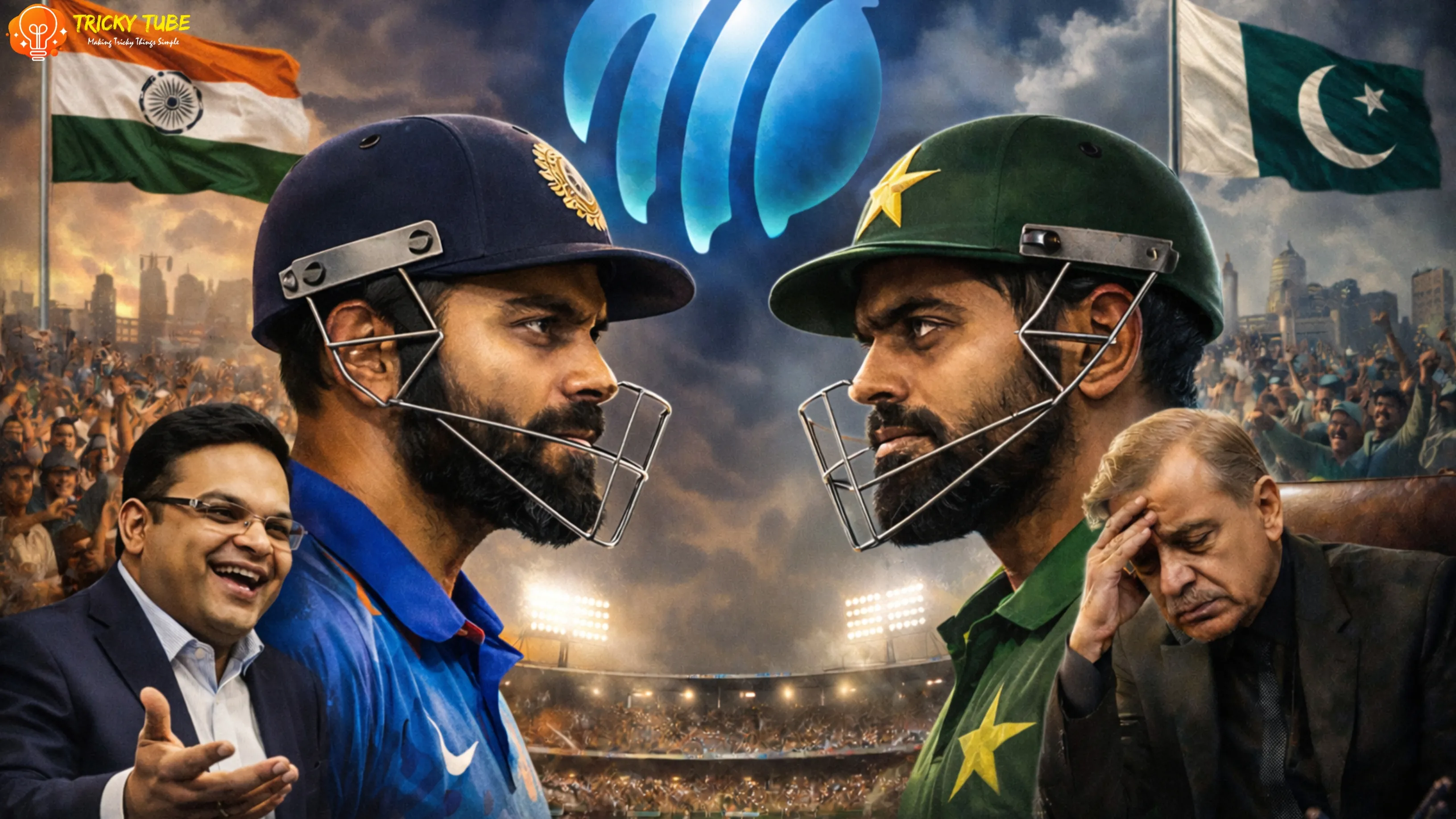
What happens when politics tries to hijack cricket—but ends up cornering itself instead? Pakistan’s dramatic U-turn on playing India in the T20 World Cup isn’t just a scheduling decision. It’s a lesson in power dynamics, ICC authority, and how modern cricket leaves very little room for emotional diplomacy.
TrickyTube’s Quick Summary
Pakistan threatened to boycott India in the T20 World Cup—but ICC rules, financial risks, and global pressure left it cornered. The eventual U-turn wasn’t about sportsmanship; it was about avoiding sanctions, revenue loss, and international embarrassment.
What if refusing to play one match ended up costing you global credibility, tournament revenue, and your standing in international cricket? That’s exactly the trap Pakistan nearly walked into before pulling back at the last moment.
For weeks, Pakistan cricket circles were buzzing with tough talk. The message sounded bold: no cricket with India. But when the dust settled, Pakistan did what it almost always ends up doing in such situations-it played. And not because of goodwill, but because the alternative was far worse.
The initial threat to boycott the India match in the T20 World Cup wasn’t really about cricket. It was political signaling, layered with frustration. Pakistan had openly supported Bangladesh after one of its cricketers was dropped from the IPL ecosystem, and when Bangladesh later pushed for a neutral venue, the ICC shut that door firmly. That rejection became a trigger point.
Inside Pakistan, the narrative quickly shifted. Fingers were pointed at the BCCI, accusing it of running the ICC from behind the scenes. Jay Shah’s presidency became a convenient symbol—less about the individual, more about India’s undeniable influence in world cricket today. The argument sounded emotional, but the structure of international cricket doesn’t operate on emotion anymore.
That’s where Pakistan misread the room.
The ICC made its position crystal clear: fixtures are not optional. Once schedules are finalized, member boards are obligated to honor them. This isn’t bilateral cricket where political discomfort can be disguised as “logistical concerns.” ICC tournaments run on contracts, broadcast rights, sponsorship commitments, and competitive integrity.
Unilateral withdrawal? That’s not protest—that’s breach.
And the consequences aren’t symbolic. Sanctions could range from match forfeiture to reduced revenue sharing, and in extreme cases, even exclusion from future ICC events. For a board already struggling financially, that’s not pressure—it’s existential risk.
The India-Pakistan match, whether people like it or not, is the single biggest commercial engine of any ICC tournament. Removing it doesn’t “punish” India. It destabilizes group balance, dents broadcast valuations, and puts the entire tournament under scrutiny. That’s why the ICC simply wasn’t going to bend.
At this point, Pakistan faced a harsh reality check. If it walked away, India would move on. The tournament would move on. The ICC would move on. Pakistan alone would be left explaining why it chose isolation over participation.
There’s also a less discussed but equally damaging angle: diplomatic embarrassment. Boycotting and then backing down makes a board look weak, not principled. It signals internal confusion rather than strength. And once that perception sets in, it’s hard to shake.
That’s why the reversal came.
The official government statement framed the decision beautifully—protecting the spirit of cricket, honoring commitments to global platforms, and keeping sport above politics. On paper, it sounds noble. In reality, it was damage control.
Here’s the uncomfortable truth: this episode shows how limited political leverage becomes once cricket enters the ICC ecosystem. Influence today doesn’t come from loud resistance, but from economic weight, viewership pull, and administrative alignment. On all three fronts, India currently sits at the center of world cricket.
One could argue—and this is my opinion—that Pakistan’s biggest mistake wasn’t threatening a boycott. It was assuming that the ICC would blink first. Modern cricket governance doesn’t work that way anymore. The system protects the tournament, not individual grievances.
The broader implication is even more telling. Geopolitics will always hover around India-Pakistan cricket, but the battlefield has changed. Symbolic protests are losing effectiveness. Financial structures, global audiences, and contractual obligations now decide outcomes.
In the end, Pakistan didn’t choose cricket over politics. It chose survival over symbolism. And that choice, however uncomfortable, probably saved it from far bigger long-term damage.
FAQ
Why did Pakistan initially refuse to play India?
The decision was politically motivated, influenced by regional tensions and dissatisfaction with ICC decisions related to Bangladesh and venue neutrality.
Q2. Can a team legally boycott an ICC match?
No. Once fixtures are announced, ICC members are contractually bound to play. Unilateral withdrawal can invite sanctions.
Q3. Would India have been affected if Pakistan boycotted?
Minimal impact on India. The bigger damage would have been to Pakistan—financially, competitively, and diplomatically.
Q4. Does BCCI really control the ICC?
While BCCI doesn’t “control” the ICC officially, India’s economic and viewership influence gives it significant informal power.
Q5. What does this mean for future India-Pakistan matches?
Political noise may continue, but ICC tournaments leave little room for boycotts going forward.