
National
January 28, 2026
₹2 Lakh Crore Lifeline: Why RBI’s Liquidity Injection Is More Than Just a Banking Move
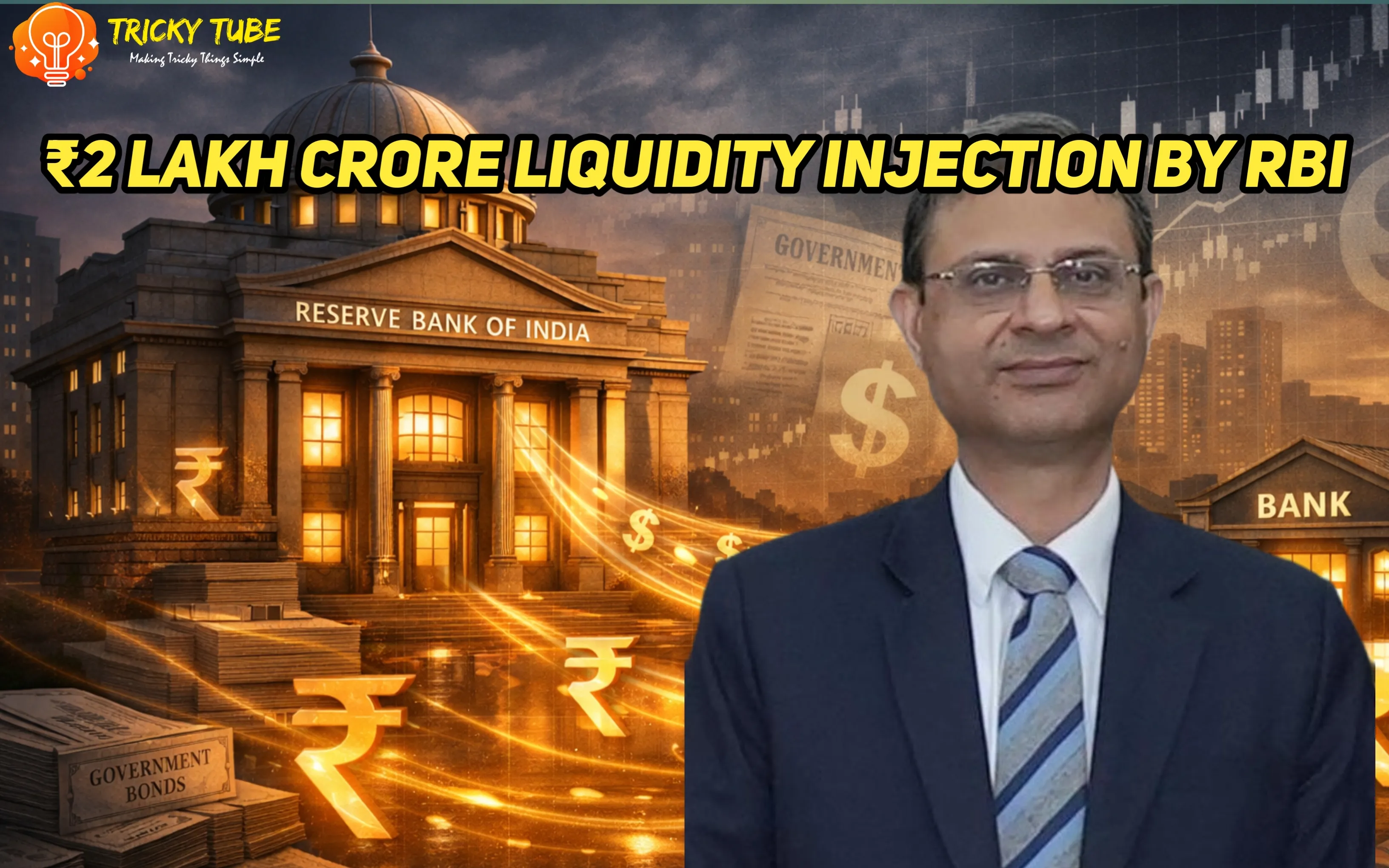
What happens when banks run short of cash even after interest rates are lowered? The Reserve Bank of India’s ₹2 lakh crore liquidity injection answers that question—and quietly reshapes borrowing costs, bond markets, and the rupee’s future.
TrickyTube’s Quick Summary
- RBI injects ₹2 lakh crore to ease tight liquidity
- Banks faced cash shortages due to heavy lending and forex interventions
- Tools used: OMOs, forex swaps, and VRR operations
- Expected outcomes: lower yields, easier credit, rupee stability
- Not stimulus—preventive financial management
What if India’s banks suddenly struggled to find money—not because demand collapsed, but because they lent too much?
That’s not a hypothetical. It’s exactly the situation that pushed the Reserve Bank of India to step in with a massive ₹2 lakh crore liquidity injection.
At first glance, this looks like routine central banking. Look closer, and it becomes clear: this move is about stabilising the entire financial ecosystem—banks, bonds, borrowers, and even the rupee.
Why Liquidity Suddenly Became Tight
On paper, everything looked fine. Interest rates had already been lowered. Credit growth was strong. Banks were lending aggressively.
But that last point was the problem.
Indian banks had pushed out loans so aggressively that surplus funds inside the system dried up. The result? Tight liquidity—banks scrambling for short-term funds despite policy support.
Add to this another silent drain: To prevent the rupee from weakening too sharply, the RBI sold dollars in the foreign exchange market. Every dollar sale pulled rupees out of the system, shrinking liquidity even further.
In simple terms:
- Banks lent too much
- RBI defended the rupee
- Cash inside the system vanished faster than expected That’s when intervention became unavoidable.
The ₹2 Lakh Crore Plan: Not One Tool, But Three
Instead of relying on a single mechanism, the RBI rolled out a three-pronged liquidity strategy, each serving a different purpose.
1.Open Market Operations (OMOs): Supporting the Bond Market
Under OMOs, the RBI buys government bonds from banks. Two tranches have been announced:
- ₹5,000 crore
- Another ₹5,000 crore shortly after But the broader signal matters more than the number. OMOs:
- Inject durable liquidity
- Push bond prices up
- Pull bond yields down Lower bond yields eventually translate into lower borrowing costs across the economy—from home loans to corporate debt. My take: This is also a quiet message to bond markets that the RBI won’t allow yields to spiral uncontrollably, especially when government borrowing remains high.
2.Forex Swaps: Liquidity Without Burning Reserves
Perhaps the smartest part of the plan is the $10 billion forex swap. Here’s how it works:
- Banks give dollars to the RBI
- RBI gives them rupees
- After three years, the transaction reverses Why this matters:
- Rupee liquidity increases immediately
- Pressure on the rupee eases
- RBI avoids outright selling of forex reserves This is clean liquidity—no panic, no sudden reserve depletion.
[!NOTE] Implication: The RBI is signalling confidence. It’s managing volatility without flashing emergency signals to global investors.
3.Variable Rate Repo (VRR): Short-Term Relief Valve
VRR operations offer banks short-term funds through auctions instead of fixed rates. Banks that are willing to pay slightly higher rates get access to liquidity quickly. Think of it as a pressure-release valve for temporary mismatches.
This ensures:
- Day-to-day funding stress doesn’t spill into panic
- Credit flow continues uninterrupted
What This Means for Banks
For banks, this move is a relief—plain and simple.
- Funding conditions ease
- Balance sheets stabilise
- Lending activity becomes less risky With more cash available, banks no longer need to compete aggressively for deposits or short-term funds.
Borrowers: The Quiet Winners
Liquidity always trickles down. As funding becomes cheaper for banks:
- Lending rates soften
- EMIs ease marginally
- Businesses find credit more accessible This won’t cause overnight rate cuts, but it creates the conditions for lower borrowing costs.
Bond Markets & Yields: The Hidden Battlefield
One of the biggest impacts will be in the bond market. OMOs increase demand for government securities, pushing prices higher and yields lower. Lower yields influence:
- Corporate borrowing costs
- Infrastructure financing
- Government debt sustainability This is crucial at a time when global yields remain volatile and emerging markets face capital flow risks.
The Rupee Angle: Stability Over Drama
Forex swaps reduce pressure on the rupee without dramatic interventions. That matters because:
- Sudden reserve drawdowns spook markets
- Currency stability reassures foreign investors
- Inflation expectations remain anchored The RBI is choosing measured control over headline-grabbing moves.
Big Picture: Why This Move Was Necessary
This liquidity injection isn’t about stimulus. It’s about preventing a system slowdown caused by technical stress, not economic weakness. If left unaddressed:
- Credit growth could stall
- Bond yields could spike
- Currency volatility could rise By acting early, the RBI is cushioning the system before stress becomes visible damage.
FAQs
Why did liquidity tighten despite rate cuts?
Because banks lent aggressively and RBI’s dollar sales drained rupees from the system.
Is this a bailout for banks?
No. Banks are solvent. This is liquidity support, not rescue.
Will loan EMIs reduce immediately?
Not instantly, but borrowing costs may soften gradually.
Does this weaken the rupee?
No. Forex swaps actually help stabilise the rupee without using reserves.
Is this a sign of economic trouble?
No. It reflects proactive management, not crisis response.