
International
January 21, 2026
India’s 30% Pulse Tariff: A Quiet Trade Strike That Shook USA
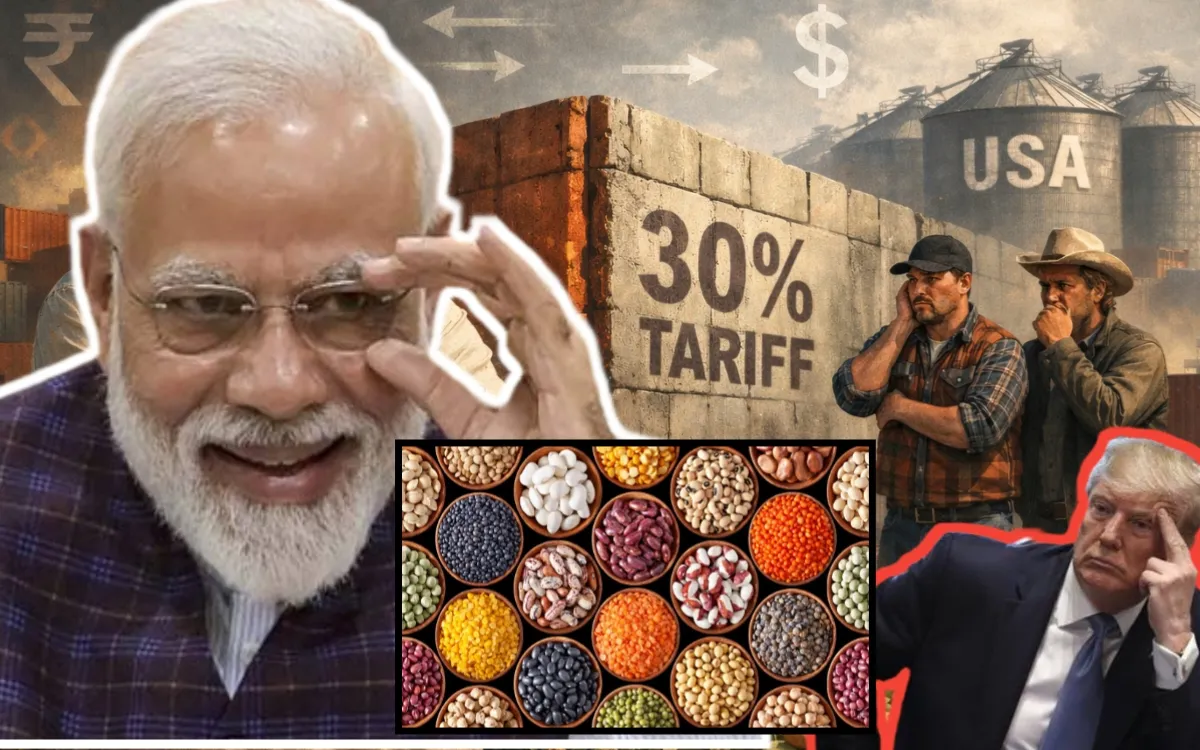
India’s 30% tariff on US pulses isn’t retaliation—it’s strategy. A silent trade strike that protects farmers, tests diplomacy, and exposes the real limits of India–US economic partnership.
TrickyTube’s Quick Summary
India’s 30% tariff on US pulses is not just a trade barrier-it’s a strategic defense of its farmers and food security. While the US sees it as unfair protectionism, India views agriculture as a non-negotiable red line. The dispute highlights the limits of India–US economic alignment, proving that even close partners won’t compromise on core domestic interests.
Is this just a tariff-or India’s silent message to the world’s most powerful economy? While headlines often scream about missiles, sanctions, and summits, sometimes the real geopolitical battles are fought quietly-through food, farmers, and trade policy. India’s decision to impose a 30% tariff on US pulses may look technical on the surface, but underneath it lies a calculated response, a strategic pause, and a clear red line in India–US relations. This move wasn’t loud. It wasn’t dramatic. But it hit exactly where it hurts.
The Trigger: A 30% Wall on American Pulses
India imposed a 30% import tariff on key US agricultural products such as lentils, yellow peas, chickpeas, and dry beans-all staple pulses in the Indian diet. For American farmers, especially those in pulse-heavy states like North Dakota and Montana, this was not a minor inconvenience. It was a market shock. These two states dominate US pulse exports, and India is one of the world’s largest pulse consumers. Losing competitiveness in such a massive market instantly translated into surplus stock, falling domestic prices, and angry farming lobbies back home in the US. So serious was the impact that US senators directly urged President Donald Trump to make removal of India’s pulse tariffs a top priority in trade negotiations. That alone tells you how deep the pain runs.
Why India Did It: Farmers Before Free Trade
India’s reasoning is blunt-and politically non-negotiable. Cheap pulse imports were crashing domestic prices, directly threatening the livelihood of millions of Indian farmers. In a country where agriculture supports a vast population, allowing foreign produce to undercut local crops is not just an economic risk-it’s a social and political landmine. India’s objectives were clear:
- Protect domestic farmers from unfair price crashes
- Stabilize pulse prices within the country
- Reduce over-dependence on imports
- Treat pulses as a food security asset, not just a trade commodity Unlike electronics or luxury goods, pulses are not optional in India. They are protein for the poor, a dietary backbone, and a crop tied deeply to rural survival. From India’s perspective, opening this sector without safeguards would be reckless.
[!quote] Opinion: This is one area where India’s protectionism is not weakness-it’s realism. No democracy can survive if it sacrifices its farmers at the altar of global trade optics.
Why the US Is Angry: Market Locked, Farmers Stuck
From US side, the argument sounds equally logical. The US claims India’s tariff is excessive and unfair, blocking free competition. American pulse exporters suddenly found themselves priced out of the Indian market, leading to:
- Declining exports
- Massive unsold inventory
- Falling prices within the US
- Political pressure from farming communities For American policymakers, this wasn’t just about trade numbers-it became a domestic political issue. When farmers suffer, elections tremble. And that’s why this “small” tariff echoed all the way to the White House.
The Bigger Picture: Agriculture-India’s Red Line
Here’s where things get truly interesting. Despite strong strategic ties, defence cooperation, and shared concerns about China, agriculture remains the toughest knot in India–US trade talks. India has historically resisted opening its agricultural market, and pulses have now become the symbol of that resistance. In trade negotiations, India has quietly but firmly labeled agriculture as a “red line.” Meaning:
[!NOTE] No matter how close the partnership, some doors stay shut.
This pulse tariff issue has now become a test case-not just about lentils and beans, but about how far economic convergence between India and the united states can really go
[!NOTE] Implication: Strategic partnerships don’t erase national priorities. India may align with the US on global security, but when it comes to farmers and food, sovereignty comes first.
Silent Strike, Loud Message
What makes this move powerful is its silence. No press conference, No chest-thumping. Just policy. India didn’t retaliate with counter-threats or public outrage. Instead, it used its market size as leverage, sending a calm but firm message:
[!NOTE] Trade access is not automatic. Respect domestic realities.
For a world used to loud diplomacy, this was a masterclass in quiet assertion.
What Happens Next?
- The US will continue pushing for tariff relaxation
- India is unlikely to fully roll back protections anytime soon
- Any compromise, if it comes, will be slow, limited, and conditional This isn’t a short-term dispute. It’s a long negotiation over who bends first-and how much.
FAQs
Why did India impose a 30% tariff on US pulses?
To protect domestic farmers from cheap imports, stabilize prices, and safeguard food security.
Which US states are most affected by this tariff?
North Dakota and Montana, the largest pulse-producing states in the US.
Why is agriculture such a sensitive issue for India?
Because millions depend on it for livelihood, and it directly impacts food security and political stability.
Can this tariff derail India–US relations?
Unlikely. But it clearly shows the limits of economic compromise despite strategic partnership.
Will India remove the tariff soon?
Only if domestic farmer interests are protected-full rollback is highly unlikely.