
International
January 20, 2026
Don't Fuel Terrorism Near India's Neighbourhood: EAM Jaishankar shocking message to Poland's Deputy PM
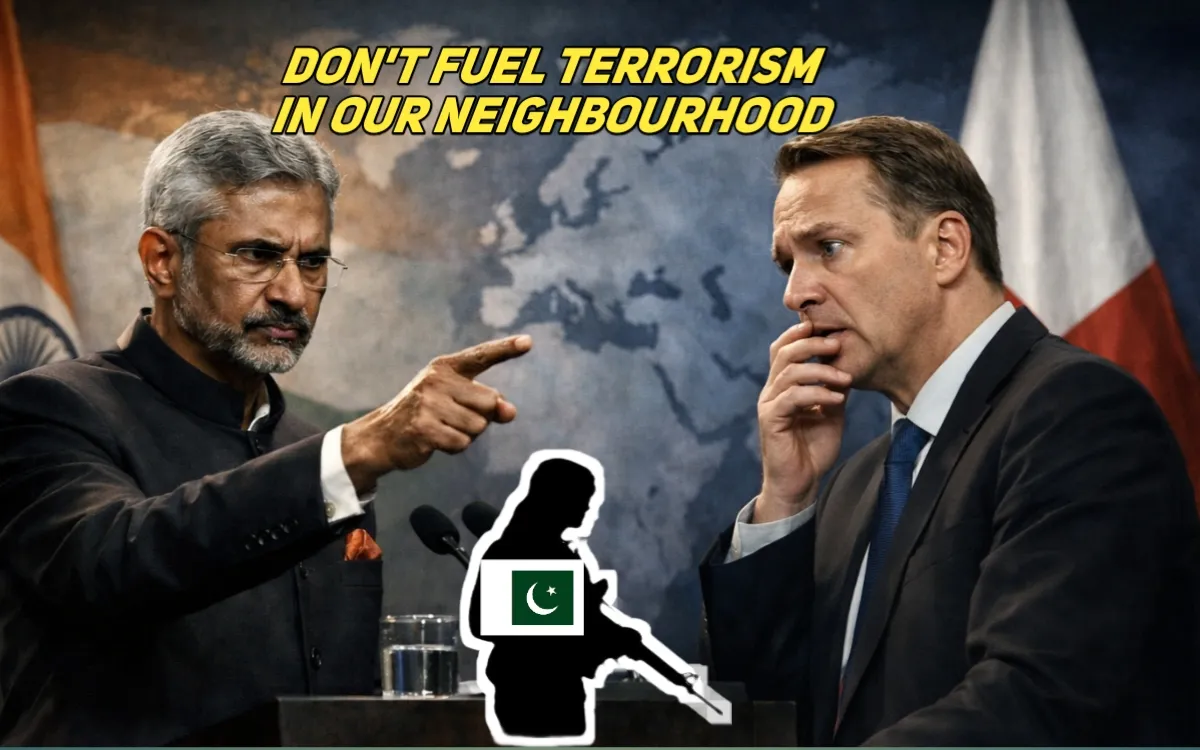
In an unusually blunt diplomatic moment, India’s External Affairs Minister S. Jaishankar delivered a clear warning to Poland over terrorism and Kashmir. This wasn’t routine diplomacy-it was India drawing a hard red line, exposing Europe’s double standards, and signalling a new era of assertive, no-nonsense foreign policy.
TrickyTube’s Quick Summary
India, through Jaishankar, sent a firm public message to Poland: engagement with Pakistan cannot ignore terrorism and Kashmir realities. This reflects India’s new assertive diplomacy-clear red lines, zero tolerance for narrative ambiguity, and a demand for consistency from global partners.
What happens when India decides it has had enough of polite silence? The answer played out in New Delhi when External Affairs Minister S. Jaishankar delivered an unusually blunt message to Radoslaw Sikorski. This wasn’t routine diplomacy. This was India drawing a line-clearly, publicly, and without diplomatic sugarcoating. At first glance, the exchange looked like a minor diplomatic discomfort between India and Poland. But dig deeper, and it reveals a much bigger shift in India’s foreign policy playbook—one that directly targets hypocrisy, selective morality, and the global habit of treating terrorism as a “regional inconvenience” rather than a universal crime.
What Exactly Happen
During official talks, Jaishankar stated that Poland should adopt zero tolerance for terrorism and should not fuel terrorist infrastructure in India’s neighbourhood. The phrasing was sharp, and the implication unmistakable: Pakistan. This was not an emotional outburst. It was a deliberate diplomatic correction. India’s discomfort stemmed from Poland’s recent joint statement with Pakistan, which referred to Jammu and Kashmir as a “disputed” territory and called for resolution under international law and the UN Charter. For India, this crossed a red line. Why? Because Kashmir is not an international dispute in India’s official position. Under the Shimla Agreement, all issues between India and Pakistan are to be resolved bilaterally-without third-party commentary. When European countries ignore this context while simultaneously engaging with Pakistan, India sees it as selective blindness, not neutrality.
Why Poland, Specifically?
India does not randomly single out countries. Poland was called out because:
- It publicly echoed Pakistan’s narrative on Kashmir
- It has a long history of military and technical cooperation with Pakistan
- It has recently intensified strategic engagement with Islamabad More importantly, Poland represents a larger European pattern-engaging economically with India while staying strategically casual about terrorism that directly affects Indian civilians. Jaishankar’s message was clear:
[!NOTE] You cannot enjoy trade benefits with India while indirectly legitimising the ecosystem that harms India.
That’s not hostility. That’s consistency.
Europe’s Double Standards-And India Calling Them Out
India’s frustration isn’t limited to Poland. It reflects a broader discomfort with Europe’s moral positioning. When Europe lectures India about buying oil from Russia, it frames the issue as values-based foreign policy. But when India raises concerns about terrorism emanating from Pakistan, the same moral urgency disappears. Poland itself has been deeply vocal about the Russia-Ukraine war, demanding global solidarity. India’s response, implicit but firm, is simple: Solidarity cannot be selective. If terrorism is wrong in Europe, it cannot be “complicated” in South Asia.
A New Indian Diplomatic Posture
This incident reflects India’s evolved diplomatic doctrine. India is no longer content with:
- Quiet demarches
- Closed-door objections
- Symbolic protests Instead, it is:
- Publicly naming inconsistencies
- Setting non-negotiable red lines
- Raising terrorism consistently at global forums like the United Nations, G20, and Shanghai Cooperation Organisation This approach sends a clear signal: India’s partnerships are increasingly value-based, not convenience-based.
[!NOTE] In my opinion, this is long overdue. For decades, India absorbed diplomatic discomfort in the hope of being seen as “reasonable.” But reasonableness should not require silence in the face of sustained violence.
Poland’s Perspective: Interests, Not Ideology
To be fair, Poland’s engagement with Pakistan isn’t driven by anti-India sentiment. It’s driven by geopolitical self-interest, particularly its confrontation with Russia. Pakistan is seen as:
- A potential military partner
- A channel for defence cooperation
- A strategic lever in Eastern European security calculations From Poland’s angle, this is pragmatic diplomacy. But pragmatism becomes problematic when it ignores consequences-especially when those consequences involve terrorism. Poland’s deputy prime minister later acknowledged terrorism as a global threat and expressed a desire to maintain strong relations with India. This suggests damage control, not defiance.
Will This Hurt India–Poland Relations?
Short term? Unlikely.
Trade between India and Poland has grown significantly, touching $7 billion over the last decade. Poland is also part of the broader European Union, with which India is negotiating a major free trade agreement . India understands economic realities. But it is also making one thing clear: Economic cooperation cannot come at the cost of strategic silence on terrorism.
Long term,
this episode may actually strengthen the relationship-by removing ambiguity. Poland now knows where India stands, without diplomatic filters.
The Bigger Message to the World
This wasn’t just about Poland. It was a signal to Europe, and beyond. India is saying:
- Terrorism cannot be divided, ignored or treated in isolation based on geography, ideology, or specific target.
- Kashmir narratives cannot be casually internationalized
- Strategic partnerships require strategic sensitivity If you want India as a partner, you must acknowledge India’s core security concerns-not sidestep them. That’s not aggression. That’s maturity.
FAQs
Why did India publicly confront Poland instead of using private diplomacy?
Because quiet diplomacy has repeatedly failed to correct Kashmir-related narratives in Europe.
Does this mean India–Poland relations are deteriorating?
No. The relationship remains stable, with strong trade ties. The message was corrective, not confrontational.
Is India changing its foreign policy style?
Yes. India is moving towards assertive, value-based diplomacy rather than silent accommodation.
Why is Pakistan central to this issue?
Because India views cross-border terrorism as inseparable from any discussion on Kashmir.
What precedent does this set?
That India will openly challenge partners if its core security concerns are ignored—regardless of the country involved.