
International
January 20, 2026
$1 Billion for Peace? Trump’s ‘Gaza Peace Board’ Offer Leaves India at a Crossroads
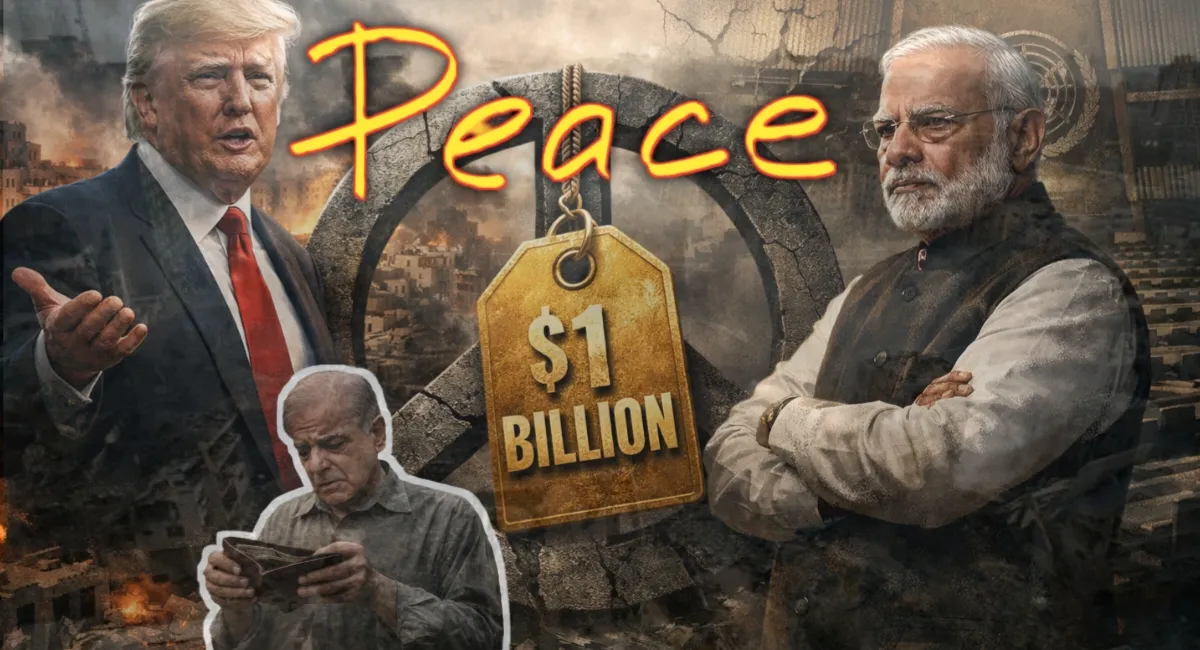
What if global peace came with a price tag-and the bill landed on India’s desk? Donald Trump’s bizarre proposal of a “Gaza Peace Board” has triggered confusion, criticism, and serious strategic questions. Should India even consider joining such a body, or is this a diplomatic trap wrapped in the language of peace? Introduction: When Peace Sounds Like a Business Deal
TrickyTube’s Quick Summary
A $1 billion “peace board” led by Donald Trump sounds bold but lacks legitimacy, transparency, and authority. For India, joining could harm its diplomatic standing and undermine multilateral values. Peace should be built through institutions-not purchased through invitations.
Introduction: When peace sounds lie a business Deal
What if someone told you that world peace could be negotiated like a corporate membership-pay up, get a permanent seat, and shake hands for history? Sounds unreal, right? Yet, this is exactly what U.S. President Donald Trump seems to be proposing with his idea of a so-called “Gaza Peace Board.” At first glance, it sounds ambitious-even noble. But once you scratch the surface, the proposal starts looking less like diplomacy and more like a pay-to-play geopolitical experiment. And right in the middle of this controversy sits India, with Prime Minister Narendra Modi reportedly being invited to join. The real question is not what Trump is offering, but what India might lose by accepting it.
What Exactly Is the ‘Gaza Peace Board’?
Trump’s idea revolves around creating an exclusive board of world leaders tasked with achieving “permanent peace” in Gaza and potentially other conflict zones. Trump himself wants to chair this board, positioning himself as the central authority. But here’s the catch that instantly raised voice worldwide: A mandatory entry fee of at least $1 billion USD for a permanent seat. In Indian terms, that’s roughly ₹9,000 crore not for aid, not for reconstruction, but simply for membership.
- No charter.
- No clear mandate.
- No enforcement power.
- No accountability. Just a board, a chairperson, and a massive financial gatekeeping mechanism.
Who’s In, Who’s Out-and Why It Matters
Interestingly, the invitation list itself raises serious red flags. Invited Countries
- Pakistan
- Turkey
- Russia
- Smaller nations like Albania and Argentina Notably Excluded
- Major European powers like France and Germany
- China-one of the most influential global players
- Any formal representation from the United Nations
[!NOTE] This selective inclusion makes the proposal look less like a global peace effort and more like a private club shaped by Trump’s personal geopolitical preferences.
The $1 Billion Question: Peace or Profit?
Let’s be blunt-charging countries to sit at a peace table is unprecedented in modern diplomacy. Traditionally:
- Nations contribute through UN funds, humanitarian aid, or peacekeeping missions.
- Financial contributions are tied to programs, outcomes, and oversight. Here?
- No clarity on where the money goes
- No transparency on how decisions are enforced
- No explanation of what authority the board actually holds This leads to an uncomfortable implication: Is this about peace-or about power and money?
[!quote] In my opinion, this model dangerously blurs the line between global governance and personal branding.
Does This Undermine the United Nations?
One of the strongest concerns raised is that this initiative could directly weaken the UN system. If powerful nations start opting for:
- Ad-hoc boards
- Personality-driven institutions
- Fee-based global influence Then what happens to decades of multilateral diplomacy? The fear of a so-called “Trump United Nations era” isn’t exaggerated. It hints at a world where global rules are replaced by private negotiations led by influential individuals, not institutions.
And for countries like India-who have consistently advocated reform within the UN rather than replacement-this is a dangerous precedent.
India’s Strategic Dilemma
India’s foreign policy has always walked a careful line:
- Strategic autonomy
- Multilateral engagement
- Moral leadership without unnecessary alignment Joining such a board raises serious questions:
- Should India pay billions just to be seen at the table?
- Does association with an unpredictable initiative harm India’s credibility?
- What message does this send to developing nations who see India as a responsible global voice? Frankly, India doesn’t need to buy legitimacy. It has earned it through diplomacy, peacekeeping, and economic strength. Accepting this offer could unintentionally signal that global influence is for sale-something India has historically opposed.
What Might Trump’s Real Motive Be?
Officially, Trump frames this as a peace initiative. Unofficially, the structure suggests:
- Personal control
- Financial leverage
- Political symbolism The absence of institutional backing makes it look less like a solution and more like a parallel power center, with Trump at its core. That doesn’t automatically make it malicious-but it certainly makes it risky.
Should India Join?
Peace cannot be auctioned. Diplomacy cannot be outsourced to exclusive boards. And global leadership cannot be reduced to a membership fee. India’s strength lies in principle-based diplomacy, not transactional politics. In my view, staying away from such ambiguous experiments protects not just India’s image-but the idea of fair global governance itself. Sometimes, saying no is the most powerful diplomatic move.
FAQ
Is the Gaza Peace Board officially recognized?
No. It has no affiliation with the United Nations or any recognized international body.
Why is the $1 billion fee controversial?
Because global peace efforts have never operated on a paid-membership model without accountability or transparency.
Has India officially responded to the proposal?
As of now, there is no confirmed official acceptance or rejection.
Could this replace the UN?
Not formally-but it could weaken the relevance of multilateral institutions if such models gain traction.
What should India prioritize instead?
Strengthening UN reforms, regional diplomacy, and principled engagement without transactional pressure.