
Education
January 18, 2026
When a -40 Score Can Make a Specialist: Is India Choosing Seat-Filling Over Life-Saving
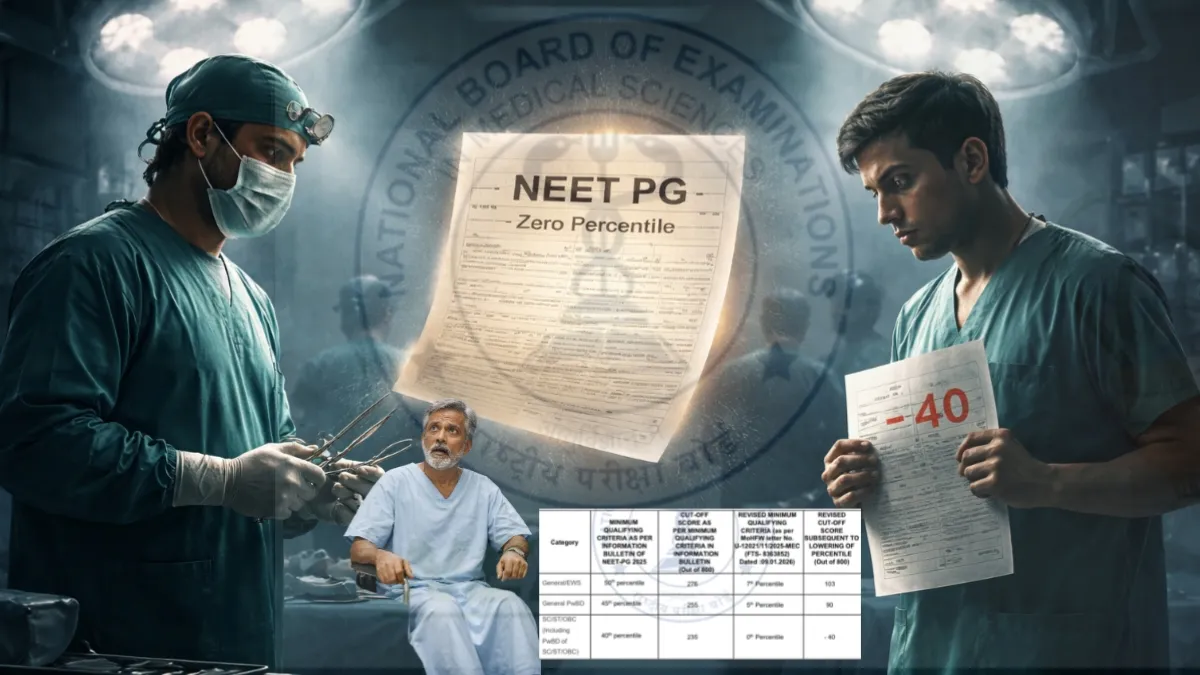
What happens when a country decides that filling medical seats matters more than medical standards? The NEET PG zero-percentile controversy has reopened a dangerous debate are we producing specialists, or just issuing degrees? This article breaks down the real reasons behind vacant PG seats, the silent collapse of training quality, and why this decision could permanently damage global trust in Indian doctors.
TrickyTube’s Quick Summary
- NEET PG zero-percentile allows even negative scorers into PG counseling
- Vacant seats exist due to poor infrastructure, high fees, and faculty shortages
- Lowering standards hides systemic failure instead of fixing it
- Patient safety and global trust in Indian doctors are at risk
- India must choose skill-building over seat-filling
Imagine walking into an operation theatre and realizing that the doctor about to operate once qualified with negative marks. Sounds unreal, right? Yet this is not a hypothetical fear-it’s a direct consequence of the decision to drop the NEET PG eligibility cut-off to zero percentile, effectively allowing candidates scoring as low as -40 to qualify for postgraduate medical courses. This single policy move has shaken India’s medical community, confused patients, and deeply frustrated thousands of hardworking doctors who missed selection despite triple-digit scores. The question is no longer about reservations or categories it’s about where medical standards actually stand today.
What the policy really means
Lowering the cut-off to zero percentile doesn’t just “relax criteria.” In practical terms, it means anyone who appeared for the exam-regardless of performance-can now enter counseling. The uncomfortable truth is that even incorrect answers throughout the paper no longer disqualify a candidate. The justification from authorities is straightforward: “Nearly 18,000 MD/MS seats remain vacant every year.” But here’s the uncomfortable counter-question: If seats are vacant, is the problem students-or the system?
Why PG Seats Are Vacant: The Real, Ignored Reasons
Infrastructure That Exists Only on Paper
Many medical colleges look impressive from the outside-new buildings, shiny auditoriums, modern signboards. But inside?
- Not enough patients
- Outdated or non-functional labs
- Limited exposure to real clinical cases Postgraduate education is not about theory. A PG student learns by seeing patients, handling complications, and making decisions under supervision. Without patient load and working labs, a degree becomes symbolic rather than skill-based.
The Private College Debt Trap
In private medical colleges, PG education often costs crores of rupees. This turns specialization into a financial transaction rather than a merit-based process. Lowering the cut-off quietly benefits one group the most: Those who can pay, not those who perform. The zero-percentile rule indirectly sends a message that money can replace merit, transforming medical education into a commodity. This is not expansion, it’s dilution.
Faculty Shortage
One of the most damaging yet least discussed issues is the absence of teachers. Senior doctors are:
- Buried in administrative work
- Drowning in files, audits, and paperwork
- Rarely available for hands-on teaching In many departments, hundreds of students depend on a single overworked professor.
Why This Directly Affects Patient Safety
Medical education standards are not an internal policy issue-they decide who treats you and your family. Lowering standards today creates:
- Specialists “on paper”
- Doctors with degrees but without confidence
- Increased risk during emergencies Reminding COVID-19 second wave, The crisis wasn’t only oxygen shortages it was the lack of trained specialists who could manage ventilators, ICUs, and critical decisions.
[!quote] You can manufacture degrees quickly. You cannot manufacture experience.
Global Trust: The Hidden Casualty
For decades, Indian doctors have been regarded as a global gold standard-working across the US, UK, Middle East, and driving medical tourism to India. But credibility is fragile. Once international systems realize that:
- Entry standards are diluted
- Selection prioritizes seat-filling
- Merit is negotiable The “Made in India Doctor” brand begins to erode. This isn’t just about healthcare-it impacts India’s soft power, global employability, and long-term reputation. One compromised policy can undo decades of trust.
Seat-Filling System vs Life-Saving System
This controversy forces a hard but necessary choice:
- Do we want every seat filled, no matter who occupies it?
- Or do we want fewer but competent specialists who can actually save lives? Lowering cut-offs hides structural failures instead of fixing them. It’s like covering cracks in a dam with paint-eventually, it will burst.
[!quote] A country that compromises on doctor quality is silently compromising on its own survival.
What Actually Needs to Change other than cut-offs
Real solutions are harder-but unavoidable:
- Functional labs, not just buildings
- Adequate patient exposure
- Experienced professors protected from administrative overload
- Proper student-teacher ratios
- Strict accountability for training quality
- Merit-first policies, even if seats remain vacant temporarily Healthcare is not a numbers game. It’s a responsibility.
FAQs
Does zero percentile mean anyone can become a specialist?
Zero percentile means eligibility for counseling, not automatic selection-but it removes performance as a meaningful filter.
Why don’t authorities improve infrastructure instead?
Infrastructure upgrades require long-term investment, accountability, and regulation-lowering cut-offs is the easiest shortcut.
Are private colleges the main issue?
They are a major factor due to high fees, but faculty shortages and poor training systems affect even government colleges.
Will this affect patients directly?
Yes. Diluted training standards eventually show up as diagnostic errors, poor decision-making, and compromised emergency care.
Can India recover from this?
Absolutely-but only if standards are strengthened now instead of normalized erosion.